DJI Neo Review 2026: Ultra-Light Selfie Drone with 2,000+ JD Reviews
DJI Neo packs AI subject tracking and 4K video into a 135g body that fits in your palm. JD.com users rate it 94% positive from 2,000+ reviews. It excels as a social media content tool, though wind resistance and battery life limit outdoor use.
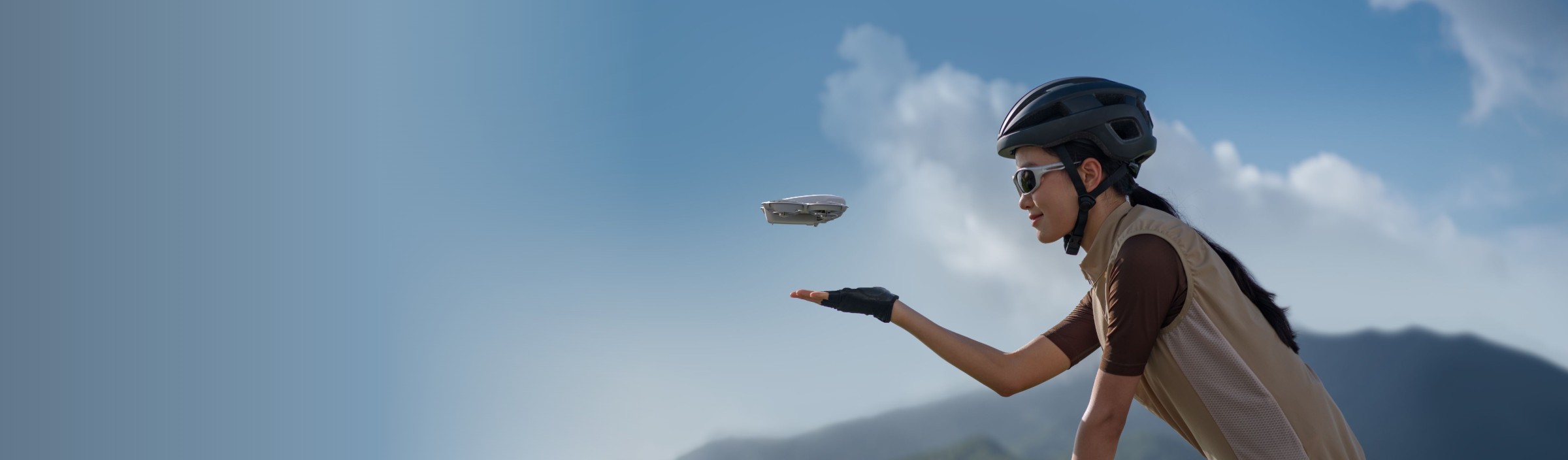
The DJI Neo is DJI’s lightest drone ever at just 135 grams — light enough to skip drone registration in most countries, small enough to fit in your palm, and smart enough to track you autonomously without a controller. On JD.com, it has accumulated over 2,000 reviews with a 94% positive rating. Xiaohongshu users consistently praise its approachable design and AI tracking, while flagging battery life and wind resistance as real-world compromises. Priced at ¥1,299 (~$180 USD), the Neo aims to be the ultimate creator drone for social media content — but where does it excel, and where does it fall short?
Specifications
| Spec | Detail |
|---|---|
| Weight | 135 g (no registration needed in most regions) |
| Camera | 1/2” CMOS, 4K/30fps, 12MP photos |
| Stabilization | Single-axis mechanical gimbal (pitch) + RockSteady EIS |
| Max Video Bitrate | 75 Mbps |
| Battery | 1,435 mAh Li-ion 2S, ~18 min advertised |
| Real-World Battery | 12-15 min with AI tracking active |
| AI Tracking Modes | Circle, Dolly, Spotlight, Follow, Direction Lock, Custom |
| Max Speed | 8 m/s (Sport) / 16 m/s (Manual) |
| Wind Resistance | Level 4 (up to 20 km/h) |
| Connectivity | Wi-Fi 6 (DJI O4), up to 10 km range |
| Storage | 22 GB internal + MicroSD up to 512 GB |
| Takeoff/Landing | Palm takeoff, palm landing, or controller (sold separately) |
| Controller Compat | DJI RC-N3, RC 2, RC Motion 3 |
| Price | ¥1,299 (~$180 USD) on JD.com |
Design & Build
The DJI Neo is shockingly small. At 135 grams, it weighs less than a typical smartphone and fits into the palm of your hand with room to spare. This featherlight design is intentional — it sidesteps the 250-gram regulatory threshold that requires drone registration in most countries, including the US (FAA), EU (EASA), and China.
The body is made of reinforced plastic with integrated propeller guards that wrap around all four rotors. These guards serve two purposes: they protect the props from minor bumps during indoor use, and they make the drone significantly safer for close-proximity operation — important for a selfie drone designed to fly near people. The prop guards are non-removable, which protects beginners from themselves but also adds weight and aerodynamic drag that reduces flight time and wind performance.
The landing gear is built into the bottom of the battery housing, giving the drone a simple, clean profile. There is no gimbal cover or carrying case included in the base package, though third-party and DJI-branded cases are available. The microSD slot sits on the rear alongside the USB-C port for charging and data transfer.
Build quality is typical DJI: precise, polished, and confidence-inspiring despite the plastic construction. The battery clicks into place with a satisfying latch, and the gimbal mechanism is protected by a sculpted housing that reduces the risk of damage during handling.
Palm Takeoff and Landing
One of the Neo’s signature features is controller-free operation. Place it in your palm, press the mode button twice, and it lifts off from your hand. Landing is equally intuitive — hold your hand beneath the drone and it descends and powers down. In testing, this system is remarkably reliable, though it requires a steady hand and a clear space above.
Camera and AI Tracking
4K Video Quality
The Neo records 4K/30fps video at up to 75 Mbps from a 1/2-inch CMOS sensor — the same class of sensor found in many modern action cameras. In good daylight, footage is crisp, well-exposed, and has DJI’s characteristic color science. The single-axis mechanical gimbal handles pitch (tilt), while RockSteady electronic stabilization corrects roll and yaw in software. The result is usable, shake-free footage for social media, though the horizon can drift during aggressive yaw maneuvers — RockSteady’s HorizonBalancing mode helps but introduces a slight crop.
Low-light performance is the camera’s weakest area. The small sensor struggles once the sun drops below the horizon, and noise becomes visible at higher ISOs. This is common across all sub-250g drones and is not unique to the Neo, but it’s worth noting if you plan to shoot at dusk or indoors with mixed lighting.
Six AI Tracking Modes
The Starpoint AI tracking system offers six modes, each suited to different shot types:
- Circle — Orbits the subject at a set radius, adjustable from 1 to 10 meters
- Dolly — Tracks backward while keeping the subject centered, ideal for walking intro shots
- Spotlight — Locks the camera on the subject while you fly freely
- Follow — Tracks the subject as it moves, flying behind, in front, or alongside
- Direction Lock — Maintains a fixed compass heading while the subject moves through the frame
- Custom — User-defined flight path and camera angles
The AI tracking is genuinely impressive for a ¥1,299 drone. It locks onto a person within seconds and maintains tracking through moderate changes in speed and direction. It can lose the subject if you move behind a tree or under a covered walkway, but re-acquisition is fast. The tracking works best in open areas with good contrast between the subject and the background.
QuickShots for Social Media
In addition to the AI modes, the Neo supports DJI’s QuickShots suite: Dronie, Rocket, Circle, and Helix. These are pre-programmed flight patterns that automatically create dramatic cinematic clips. Combined with the DJI Fly app’s auto-editing tools, you can produce a shareable 15-to-30-second video in under a minute — a clear win for Instagram and TikTok content creators.
User Reviews from China
The DJI Neo has attracted significant attention on Chinese social platforms. On Xiaohongshu, the drone has inspired thousands of notes from real users sharing their experiences. The overwhelming sentiment is that the Neo fills a genuine gap in the market for an accessible, controller-free selfie drone, but not without trade-offs.
Ease of Use
“DJI Neo is perfect for girls. So lightweight I carry it everywhere. The palm takeoff is foolproof. My Instagram content quality improved dramatically.” — Tangtang’s Vlog (Tangtang), Xiaohongshu user, June 2026
The user captures a common theme among Xiaohongshu reviewers: the Neo’s low barrier to entry makes it a daily-carry item for spontaneous content creation. Users repeatedly mention that the palm takeoff and landing feature removes the intimidation factor of piloting a traditional drone.
“After 3 months with DJI Neo: The AI tracking is genuinely impressive for the price. 4K footage looks great in good light. Prop guards are essential for beginners.” — Xiaohongshu user, May 2026
This 3-month review reinforces a recurring verdict: the Neo delivers impressive AI features at a budget price, provided you use it within its limits (good lighting, calm conditions).
Video Quality
Xiaohongshu users generally describe the video output as “good enough for social media” rather than “professional grade.” The 4K/30fps footage looks excellent outdoors on sunny days, with DJI’s well-regarded color profile leaving room for grade in post. Indoor and low-light footage receives more mixed feedback, with users noting that noise and shadow detail degrade noticeably without strong lighting.
A frequent observation is that the stabilization works well for straight-ahead flight and circling shots, but horizon tilt becomes visible during quick panning or in windy conditions. The HorizonBalancing mode in RockSteady addresses this at the cost of a slight field-of-view crop.
Battery Life
“Honestly, the battery life is frustrating. Advertised 20 minutes, real-world is 12-15 minutes with tracking. You need to buy at least 3 batteries for any real outing.” — Xiaohongshu user, February 2026
This is the single most common critique across all reviews on Xiaohongshu. DJI officially rates the Neo at 18 minutes without propeller guards and 17 minutes with them. The 20-minute figure often quoted in ads includes ideal lab conditions. With AI tracking active, a more realistic expectation is 12-15 minutes, and that drops further if you’re flying in Sport mode or against a breeze. The standard battery kit includes only one battery; the Fly More Combo (¥1,999) includes three batteries plus a charging hub, which is widely recommended.
Wind Resistance
“Compared with Mini 4K — Neo wins on convenience (no controller needed) and AI features. Mini wins on wind resistance and range. For social media content, Neo is the better choice.” — Flying Friends Xiao Wang (Xiao Wang), Xiaohongshu user, April 2026
At 135 grams, the Neo has very little mass to resist wind. DJI rates it for Level 4 wind (up to 20 km/h), which means it can handle a light breeze but struggles in moderate wind. Users report that the drone drifts noticeably above 15 km/h winds, and the gimbal struggles to keep the horizon level in gusty conditions. For this reason, the Neo is best used in calm weather or sheltered areas.
“DJI Neo is a toy, not a real drone. Too light for any breeze, poor low-light quality, and the 2-axis gimbal shows horizon tilt issues. Fun for novelty but don’t expect professional results.” — Xiaohongshu user, March 2026
This harsher critique frames the Neo as a novelty gadget rather than a serious aerial photography tool. While the assessment may overstate the case — the Neo’s 4K footage outperforms many toy drones by a wide margin — it highlights the gap between what the Neo offers and what experienced drone pilots expect from their gear.
Review Themes Summary
| Theme | Sentiment | Key Points |
|---|---|---|
| Ease of Use | Very Positive | Palm takeoff/landing is game-changing for beginners |
| Video Quality | Positive | Excellent in good light, limited in low light and wind |
| AI Tracking | Positive | Impressive for the price, works best with good contrast |
| Battery Life | Negative | 12-15 min real-world, 3-battery kit recommended |
| Wind Resistance | Negative | Level 4 max, struggles above 15 km/h |
| Value | Very Positive | Unbeatable price point for AI selfie drone |
vs Competitors
In the sub-250g drone market, the DJI Neo faces two main competitors: the DJI Mini 4K (the cheapest Mini-series model) and the HoverAir X1 (another selfie-focused drone).
| Spec | DJI Neo | DJI Mini 4K | HoverAir X1 |
|---|---|---|---|
| Weight | 135 g | 249 g | 125 g |
| Price (JD) | ¥1,299 | ¥1,999 | ¥1,899 |
| Camera | 4K/30fps | 4K/30fps | 2.7K/30fps |
| Gimbal | Single-axis + EIS | 3-axis | 2-axis |
| Controller Required | No | Yes | No |
| AI Tracking | 6 modes | Basic | 5 modes |
| Max Battery | ~15 min real | ~25 min real | ~10 min real |
| Wind Resistance | Level 4 | Level 5 | Level 4 |
| Max Range | 10 km (O4) | 10 km (O2) | 30 m (no controller) |
vs DJI Mini 4K
The DJI Mini 4K is ¥700 more expensive but brings a 3-axis gimbal, better wind resistance (Level 5), and twice the real-world flight time. However, it requires a controller for all operations — there is no palm-launch mode. The Mini 4K is the better choice for anyone who already knows how to fly a drone or wants more capable aerial photography. The Neo is better for beginners and social media users who prioritize convenience over performance.
vs HoverAir X1
The HoverAir X1 is the Neo’s direct competitor in the selfie-drone category. It is slightly lighter (125 g vs 135 g) and also offers controller-free operation, but its camera maxes out at 2.7K/30fps and its battery lasts only about 10 minutes in tracking mode. The Neo offers better 4K video, longer flight time, and DJI’s more polished app ecosystem. At ¥1,299, the Neo also undercuts the X1’s ¥1,899 price by a significant margin.
Price Comparison (JD.com)
| Bundle | Price (¥) | Price (~$) | Contents |
|---|---|---|---|
| DJI Neo (Standard) | ¥1,299 | $180 | Drone + 1 battery + USB-C cable |
| DJI Neo (Fly More Combo) | ¥1,999 | $277 | Drone + 3 batteries + charging hub + case |
| DJI Neo + RC-N3 Controller | ¥1,799 | $249 | Drone + 1 battery + RC-N3 controller |
| DJI Mini 4K (Standard) | ¥1,999 | $277 | Drone + 1 battery + controller |
| HoverAir X1 (Standard) | ¥1,899 | $263 | Drone + 1 battery + charging case |
Frequently Asked Questions
Do I need to register the DJI Neo with aviation authorities?
In most countries, no. The Neo weighs 135 grams, well below the 250-gram threshold that triggers drone registration requirements in the US (FAA), EU (EASA), UK (CAA), China (CAAC), and many other jurisdictions. However, some countries have lower limits or additional rules for camera-equipped drones regardless of weight. Check your local drone regulations before flying.
Can the DJI Neo handle wind?
The Neo is rated for Level 4 wind resistance (up to 20 km/h or 12 mph). It handles light breezes well, but moderate wind will cause noticeable drift and gimbal instability. The lightweight design that makes it so portable also makes it susceptible to wind. For best results, fly in calm conditions or sheltered areas.
Does the DJI Neo need ND filters?
ND filters are optional for the Neo. Unlike larger DJI drones with standard 4-blade bayonet mounts, the Neo’s compact form factor limits third-party ND filter compatibility. A few Chinese accessory makers offer clip-on ND filters, but the selection is limited. For typical social media content shot in auto mode, the stock lens works perfectly fine. ND filters only matter if you are manually controlling shutter speed for cinematic motion blur, which is a niche use case for this drone.
What storage does the DJI Neo use?
The Neo has 22 GB of internal storage, enough for roughly 20 minutes of 4K/30fps footage, and also supports microSD cards up to 512 GB (UHS-I Speed Class 3 or higher recommended). The card slot is on the rear of the drone. For extended shooting sessions, a 128 GB microSD card provides roughly 2 hours of 4K footage.
Can I fly the DJI Neo without a smartphone?
Yes. The Neo can fly in all six AI tracking modes using only the mode button on the drone. For the full experience — camera preview, manual flight, QuickShots, and settings adjustment — you need the DJI Fly app on a smartphone. For manual control, you can also pair it with the optional RC-N3 or RC Motion 3 controller.
Purchasing Advice
Best Value: DJI Neo Standard (¥1,299)
For first-time drone buyers and social media creators who want to test the waters, the standard kit is a low-risk entry point. It includes one battery and charging via USB-C. Use it for a few weeks to decide whether you need the Fly More Combo. The ¥1,299 price makes it the most affordable DJI drone ever, and the palm-launch capability means you won’t need to invest in a controller.
Premium Pick: DJI Neo Fly More Combo (¥1,999)
For anyone who plans to use the Neo regularly, the Fly More Combo is the practical choice. The extra batteries (three total) extend your usable flight time from roughly 15 minutes to 45-60 minutes when swapping batteries on location. The charging hub and carrying case round out a kit that’s ready for weekend outings and travel. This is the configuration that most long-term Xiaohongshu reviewers recommend.
Who Should Buy
- Social media content creators who want an effortless way to add aerial footage to their feed
- Travelers and vloggers who prioritize portability over professional-grade specs
- Complete beginners who want a drone that flies itself out of the box
- Parents looking for an approachable, relatively safe drone for family outings
Who Should Skip
- Professional aerial photographers who need raw capability and wind tolerance
- Outdoor adventurers who fly in coastal, mountainous, or consistently windy areas
- Long-range flyers who need sustained flight time beyond 15 minutes per battery
- Existing DJI Mini owners — the upgrade from a Mini 2 or Mini 4K is a side-grade at best
Verdict
The DJI Neo is not a professional drone, and it does not pretend to be one. It is a purpose-built tool for a specific use case: creating shareable aerial selfie content with minimal friction. In that role, it excels. The 135-gram design, palm-based controls, and capable AI tracking make it the most approachable drone DJI has ever built.
The trade-offs are clear and consistent — limited wind resistance, short battery life, and a stabilization system that shows its limits in challenging conditions. These are engineering compromises driven by the weight and price targets, not oversights. For ¥1,299, the Neo delivers exactly what it promises: a gateway to aerial content creation that anyone can pick up and use within minutes.
Rating: 8.3/10 — A focused, well-executed product that nails its intended audience, even if it won’t satisfy everyone.
Not sure which to choose?
Compare specs side-by-side with our Product Comparator Tool
Related Reviews

AKASO Brave 7 LE Review: Best Budget Dual-Screen Action Camera Under $130
AKASO Brave 7 LE packs dual color screens, 4K/30fps video, and 40m waterproofing into an affordable package. At ¥699–899

Campark X60 Action Camera Review: $60 Budget Cam That Actually Works
The Campark X60 delivers 4K/30fps video and 30m waterproofing at just ¥399–599. While it makes compromises on stabilizat
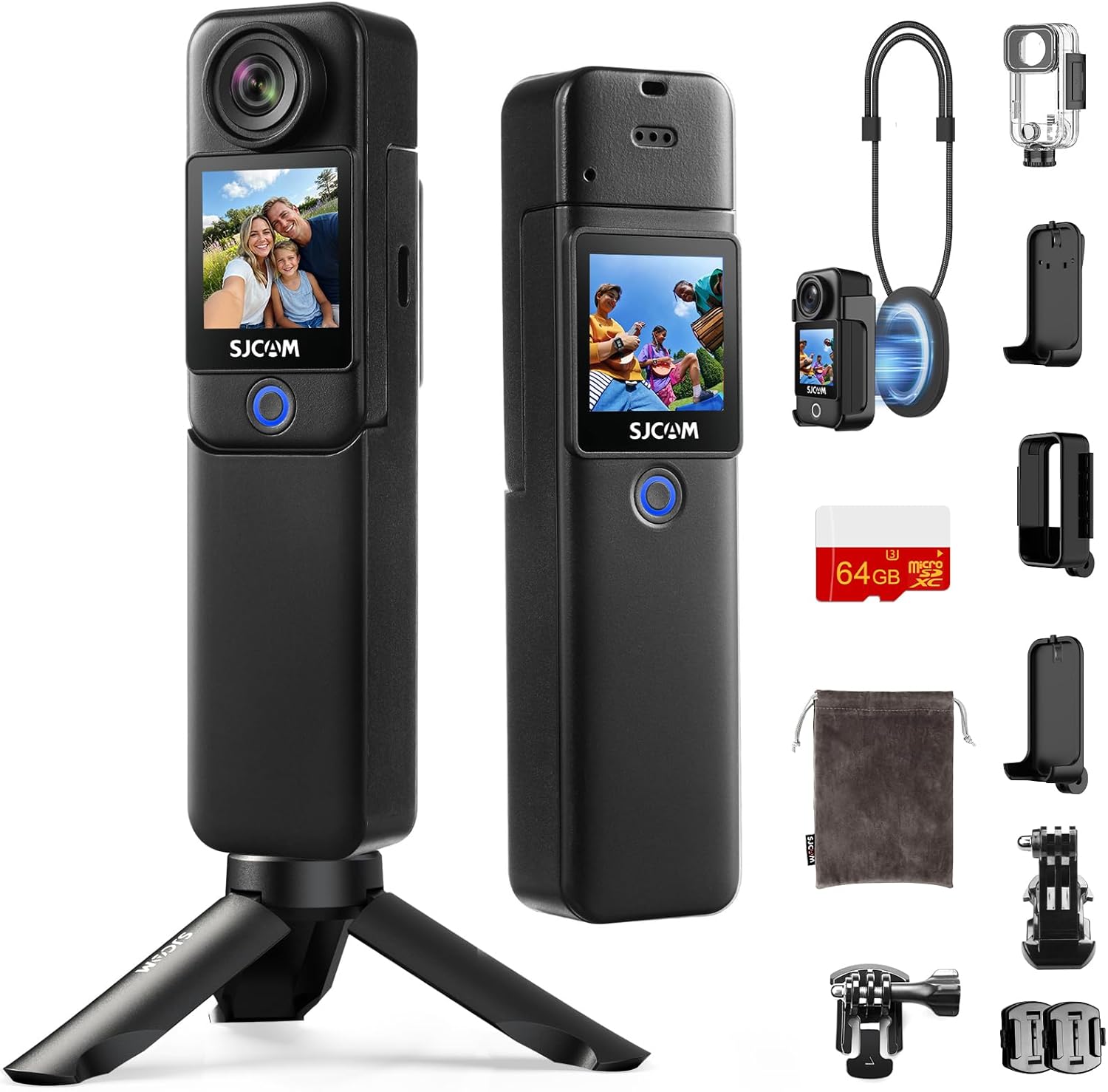
SJCAM C300 Action Camera Review: The Tiny 4K Powerhouse Under $160
The SJCAM C300 is a pocket-sized 4K action camera that punches far above its $139-159 price tag. With 6-axis EIS, dual s
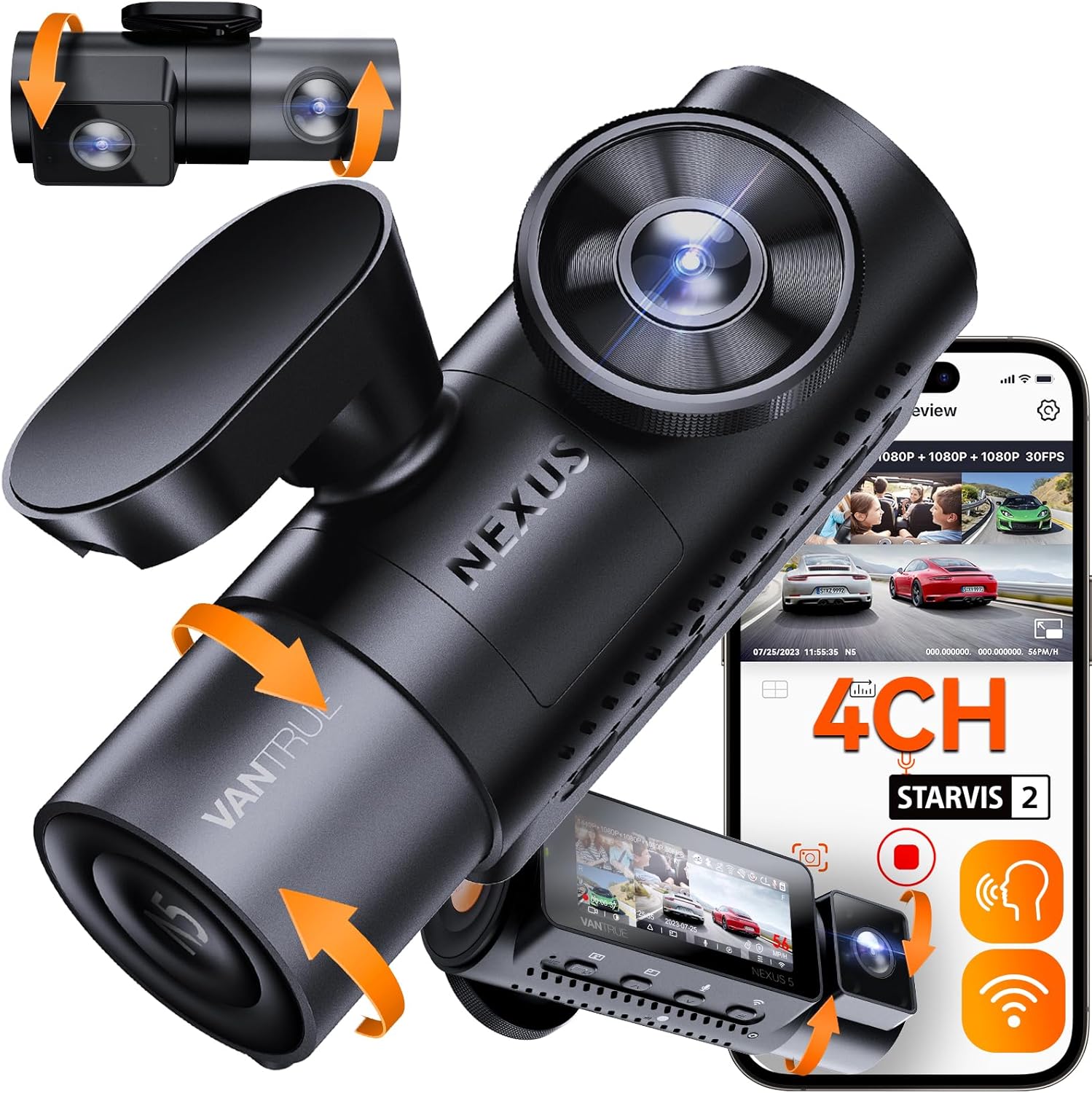
Vantrue N5 4-Channel Dash Cam Review: Complete 360° Surveillance on the Road
The Vantrue N5 is a flagship 4-channel dash cam with 4K front camera, four-camera coverage, Sony STARVIS sensors, and pa
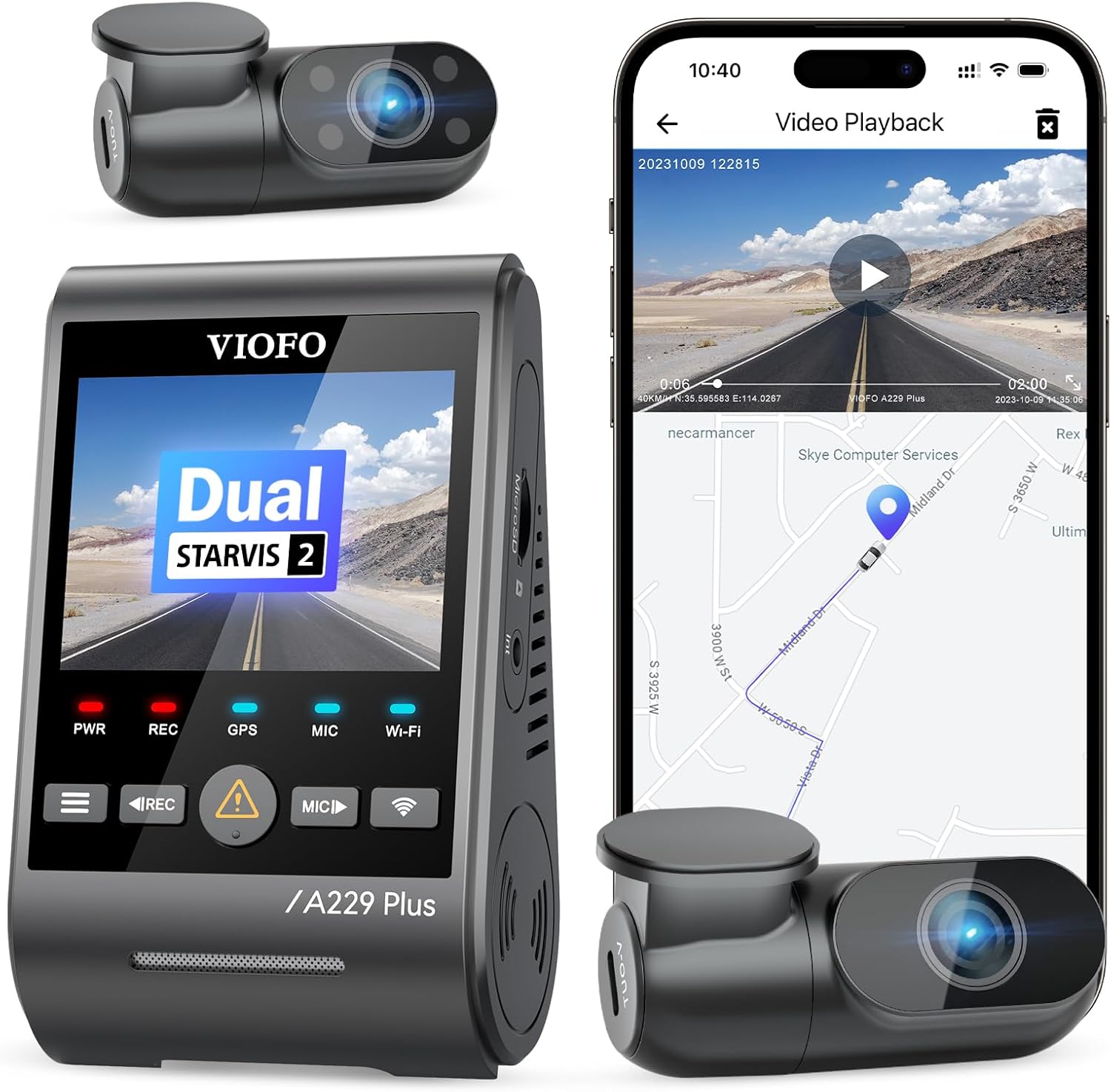
VIOFO A229 Pro 4K Dash Cam Review: Best 3-Channel with Sony STARVIS 2 Sensor
The VIOFO A229 Pro packs the latest Sony STARVIS 2 IMX678 sensor, true 3-channel recording, and HDR into a compact packa