Huawei Band 11 Pro Review 2026: Standalone-GPS Fitness Band at ¥296 — 99% Positive on JD
The Huawei Band 11 Pro NFC is the ¥296.65 fitness band on JDs self-operated store (99% positive rate, from a ¥349 regular price, down 15% on the September 10 deal) that packs standalone GNSS positioning, a 1.62-inch 2000-nit AMOLED screen and an aluminum-alloy frame into an 18g body — the answer for runners who want phone-free GPS tracking without paying smartwatch money. Xiaohongshu owners call it the best cheap GPS band and the enough-is-enough upgrade from ¥3,000 watches, but oxidation complaints on the metal case, a weak vibration motor and the base-vs-Pro ¥100 debate are the recurring caveats — this review weighs it against the Xiaomi Band 10 at ¥289, the Honor Band 11 Pro at ¥299 and the Huawei Fit 4.
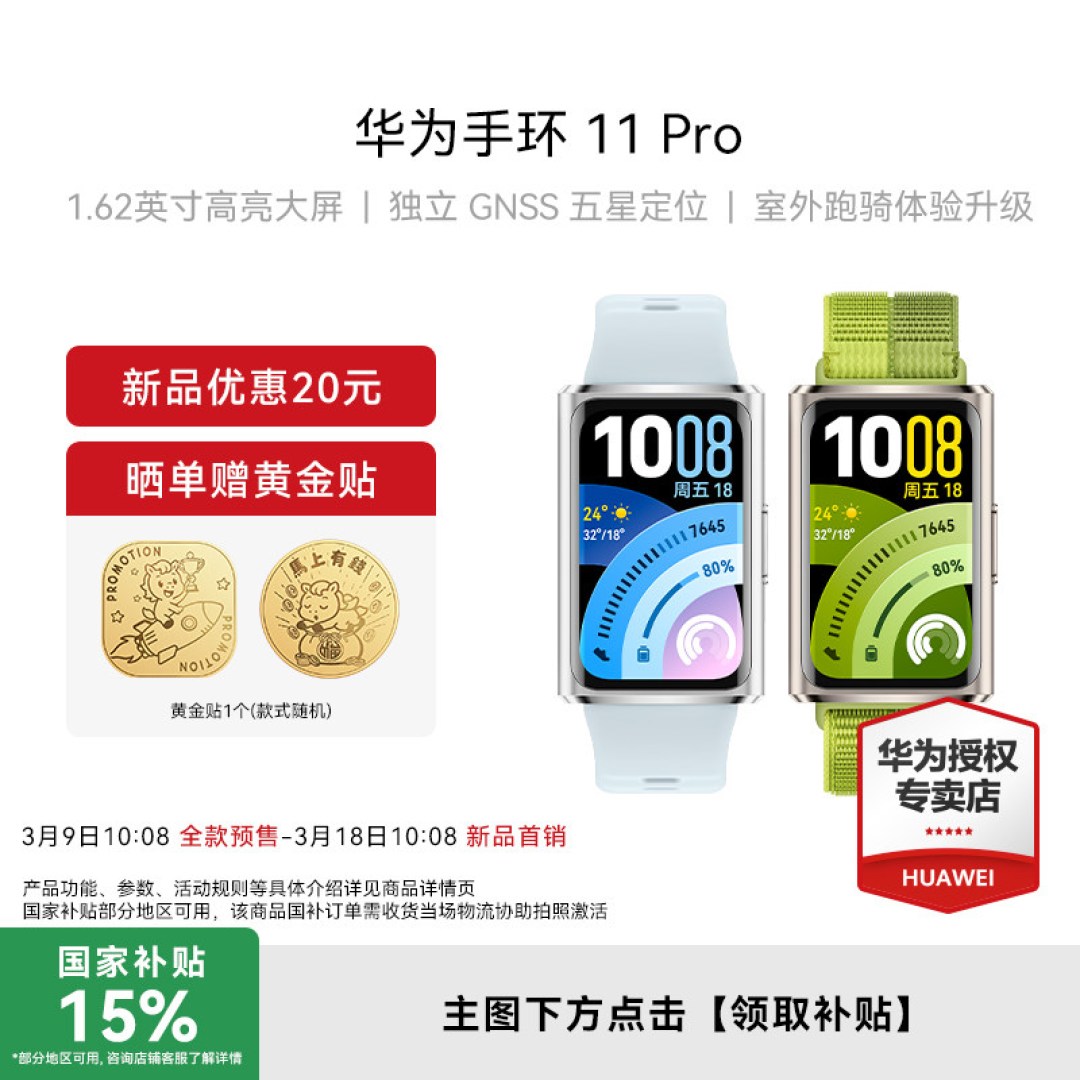
Huawei Band 11 Pro Review 2026: Standalone-GPS Fitness Band at ¥296
The Huawei Band 11 Pro answers the question that separates fitness-band buyers from smartwatch buyers in 2026: how much do you actually need to spend to run without your phone and still get serious health tracking? On JD’s self-operated store the Band 11 Pro NFC is at ¥296.65 on the September 10 deal feed (SMZDM p/181976219 and wiki-tracked listing, ¥349 regular price, down 15% from the last published price) on a listing carrying a 99% positive rate. For that money Huawei packs what the base Band 11 leaves out: standalone GNSS satellite positioning — record running, cycling and hiking tracks without carrying a phone — plus a 1.62-inch AMOLED micro-curved screen at 60Hz with a 2,000-nit peak brightness that stays readable in direct sun, an 8.99mm-thin aluminum-alloy frame at about 18g, a 300mAh battery good for roughly 14 days, and Huawei’s full health stack including sleep staging, sleep-apnea risk screening and the newer emotion-monitoring features. Xiaohongshu’s most-quoted line about it is from a real owner: “the cheapest GPS band — way ahead” and the most decisive thread is the ¥100 question — is the Pro worth ¥100 over the base Band 11? Conclusion: ✅ the best-priced standalone-GPS fitness band when the ¥296.65 deal stacks — buy it for phone-free running, serious sleep tracking and an 18g all-day wearable; ⚠️ skip it if you never run or hike (the ¥239 Band 11 NFC covers you), if you want weeks-long battery life (the ¥299 Honor Band 11 Pro runs 26 days), or if you are a Huawei phone user who wants deeper app and call features — that is Fit 4 or Watch GT territory.
Specifications
| Specification | Detail |
|---|---|
| Model | Huawei Band 11 Pro NFC (Yusha Black / Island Blue / Vitality Orange), also sold as dual-band-strap set |
| Display | 1.62-inch AMOLED micro-curved screen, 60Hz, 2,000-nit peak brightness |
| Positioning | Standalone GNSS (independent satellite positioning) — phone-free outdoor tracking + running-form analysis (ground-contact time, left-right balance, track mode) |
| Body | Aluminum-alloy frame, 8.99mm thin, ~18g (without strap), fluororubber strap standard |
| Battery | 300mAh, ~14 days typical use |
| Water resistance | 5ATM / IP68 — swimming and rain OK |
| NFC (this version) | NFC door-access card, transit card, always-on/off-screen payments; Alipay + WeChat Pay |
| Health | Heart rate, SpO2, stress, emotion monitoring, TruSleep sleep staging with sleep-apnea risk screening, high-altitude research, women’s health, activity rings |
| Sports | 100+ workout modes, wheelchair mode, phone-finder, remote camera shutter (HarmonyOS) |
| Platform | JD self-operated (tracked listing) |
| Price (2026-09) | ¥296.65 (Sep 10, 15% below last low; ¥349 regular) |
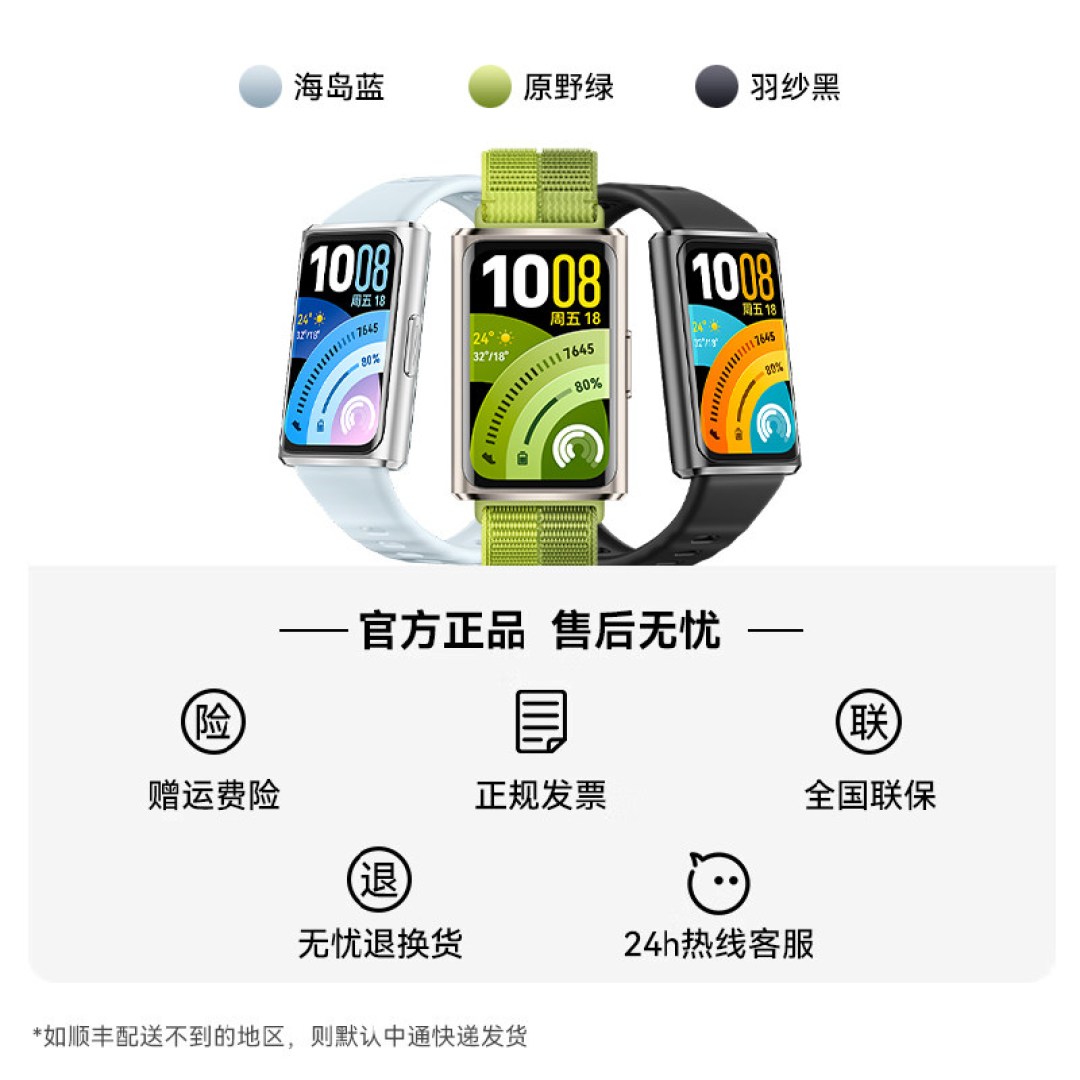 — the 8.99mm aluminum-alloy body at ~18g is what makes this wearable disappear on the wrist; it is also, Xiaohongshu notes, the surface that can oxidize if mistreated.
The ¥100 Question: What the Pro Actually Adds
Huawei’s Band 11 family in China is a four-SKU ladder that confuses more buyers than it helps: the base Band 11 (from about ¥232), the Band 11 NFC (¥239 on the current feed), the Band 11 Pro (adds standalone GNSS and the aluminum case), and the Band 11 Pro NFC (this review’s ¥296.65 unit). The Pro premium over the base is roughly ¥100, and Xiaohongshu’s most-liked version-selection thread (923 likes, “is it really necessary to spend ¥100 more on the Pro?”) walks through exactly what that ¥100 buys: first and most important, standalone GNSS — the base band cannot record an outdoor running route without a phone tethered nearby, while the Pro logs tracks, pace and distance on its own; second, the aluminum-alloy frame replaces the base’s polymer case, which is a looks-and-durability upgrade that shows on the wrist. Everything else — the 1.62-inch screen, the health sensors, the battery class — is shared with the base model.
Standalone GPS is the whole argument. The most repeated owner line on SMZDM and XHS is “the cheapest GPS band” (GPS) — a real owner who paid ¥274 with a coupon calls it “way ahead” and describes ditching his one-and-a-half-year-old Band 9 for the phone-free workout tracking. For runners, cyclists and hikers the Pro’s GNSS means leaving the phone at home or in the pack: the band records the route, shows it simply on the wrist, and adds running-form analysis — ground-contact time and left-right balance — that the base model cannot offer. XHS’s four-band buying guide and the “Band 11 Pro vs Fit 4” comparison threads both land on the same rule: if you run outdoors without your phone, the Pro’s GPS is the deciding feature; if you never will, the base Band 11 NFC at ¥239 is most of the experience for ¥60 less.
The emotion-monitoring and health stack. Huawei’s 2026 health pitch for the Band 11 line adds multi-dimensional emotion monitoring on top of the usual heart-rate, SpO2, stress and sleep suite — the band tracks mood indicators and offers guided breathing when stress is detected, plus TruSleep sleep staging with sleep-apnea risk screening and high-altitude research features for travelers. Owners who wear the band 24/7 describe the sleep data as accurate enough to act on (“it caught my late-night heart-rate spikes from overwork and pushed me to fix my schedule”), which is the strongest praise the category gets.
One version note. Xiaohongshu reviews sometimes describe the Pro without NFC (a cheaper SKU) and complain it lacks NFC door access and offline payment — check the model code: the ¥296.65 unit tracked here is the Pro NFC version with door-access, transit and payment support. If you buy the non-NFC Pro, those features are genuinely absent.
What Verified JD Owners Say: Decoding 99% Positive
A 99% positive rate on a ¥296.65 fitness band is at the top of the category — bands usually sit in the mid-to-high 90s because expectations are simple and most units either work or do not. The verified-owner pattern on the Band 11 Pro clusters on four points. First, the standalone GPS is the most-praised feature: owners who run or cycle without their phone report fast satellite lock and accurate tracks, with dedicated track-running modes that fit stadium loops. Second, the screen gets consistent “visible in direct sunlight” praise — the 2,000-nit peak brightness is the spec that shows up in daily use, and the 60Hz panel feels smooth for the class. Third, all-day comfort is real: at ~18g with the fluororubber strap, owners describe wearing it through sleep without noticing it, which is exactly what 24/7 health tracking requires. Fourth, the battery delivers as claimed — a week-plus of full tracking between charges is the consistent report, with lighter use stretching toward the 14-day figure.
The caveats in the same reviews are equally specific: the vibration motor is a rotor unit that owners find weak — messages and alarms can be missed in noisy environments; sleep tracking requires manual or scheduled activation rather than full auto-detection on some firmware versions; and the charging cradle is described as not holding as firmly as owners would like. None of the tracked feedback describes a systemic failure — the complaints are class-level compromises, which is what you would expect at ¥296.
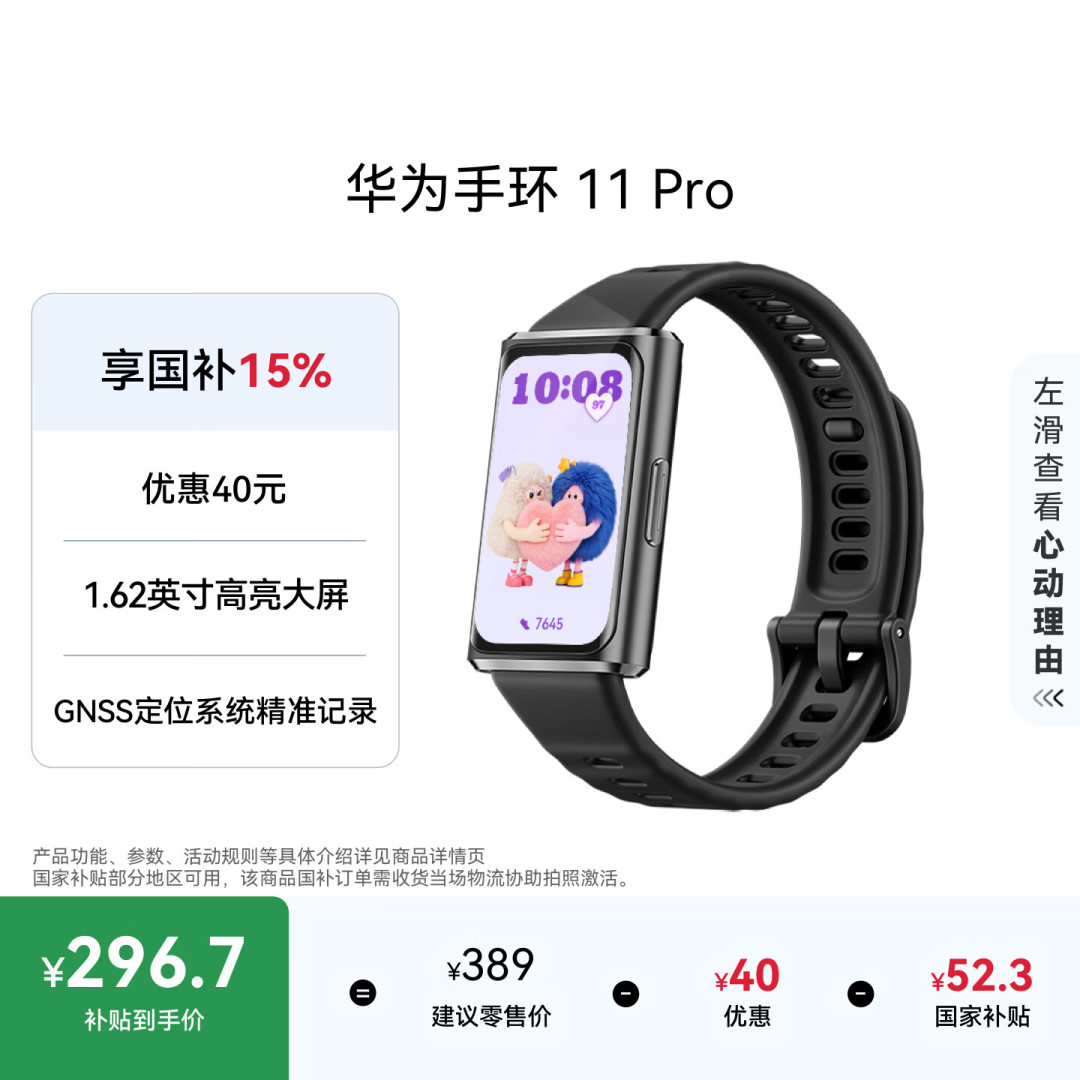 — 24/7 wear is the point of an 18g band: sleep staging, sleep-apnea risk screening and heart-rate alerts are the features owners say they act on.
What Xiaohongshu Users Say
The buy signals. The strongest XHS signal is the enough-is-enough narrative: a widely-shared SMZDM/XHS post titled “a ¥300 band is more comfortable to use than a ¥3,000 watch — this purchase is very ‘scientific’” tells the story of a four-year-old Huawei Watch 3 Pro owner whose battery died, who priced the replacement and realized his actual needs — workout logging, notifications, health basics — were all covered by the Band 11 Pro at roughly one-tenth of the watch’s price. The 1795-like 2026 Band 11 buying guide, the 858-like four-band decision thread (Huawei Band 11 Pro vs Honor Band 11 Pro vs Xiaomi Band 10 vs Honor Band 11) and a 250-like “one image to choose between Band 11 Pro and Fit 4” all frame the Pro as the runner’s pick in the ¥300 class. A 320-like unboxing and a 353-like “idiot-proof tutorial” round out the positive cluster.
The oxidation threads and the return posts are real — and worth reading twice. Xiaohongshu’s Band 11 Pro chatter has two recurring negative clusters. First, the aluminum-frame oxidation complaints: a 26-like “Band 11 Pro oxidizes and rusts badly” post and a 13-like “the wounds keep growing” note document surface corrosion on the metal case, which is the trade-off for the aluminum upgrade — buyers with sweaty workouts should know the frame can discolor over time. Second, the return-and-regret posts: an 84-like “Band 11 Pro is so disappointing I’m returning it,” a 71-like “Band 11 Pro, are you trying to ruin me?”, a 130-like “avoid the Band 11 Pro” and a 24-like “think twice before entering” thread form a genuine dissatisfied minority. Read together with the 96-like “Huawei band almost did me in” post (a heart-rate false-alarm story) and a 17-like sleep-accuracy complaint, the pattern is: the health sensors are sensitive and occasionally alarming — which is a feature for some owners and a nuisance for others — and QC on the metal frame is imperfect.
Verdict from Xiaohongshu: the Band 11 Pro is the ¥300-class band for runners and health-focused 24/7 wearers — the cheapest standalone-GPS band with Huawei’s sleep and emotion stack — with four standing caveats: the aluminum case can oxidize with heavy sweat, the vibration motor is weak, the sensors occasionally over-alert (which some call a feature), and if you never run phone-free, the base Band 11 NFC saves you ¥60 for the same screen and sensors.
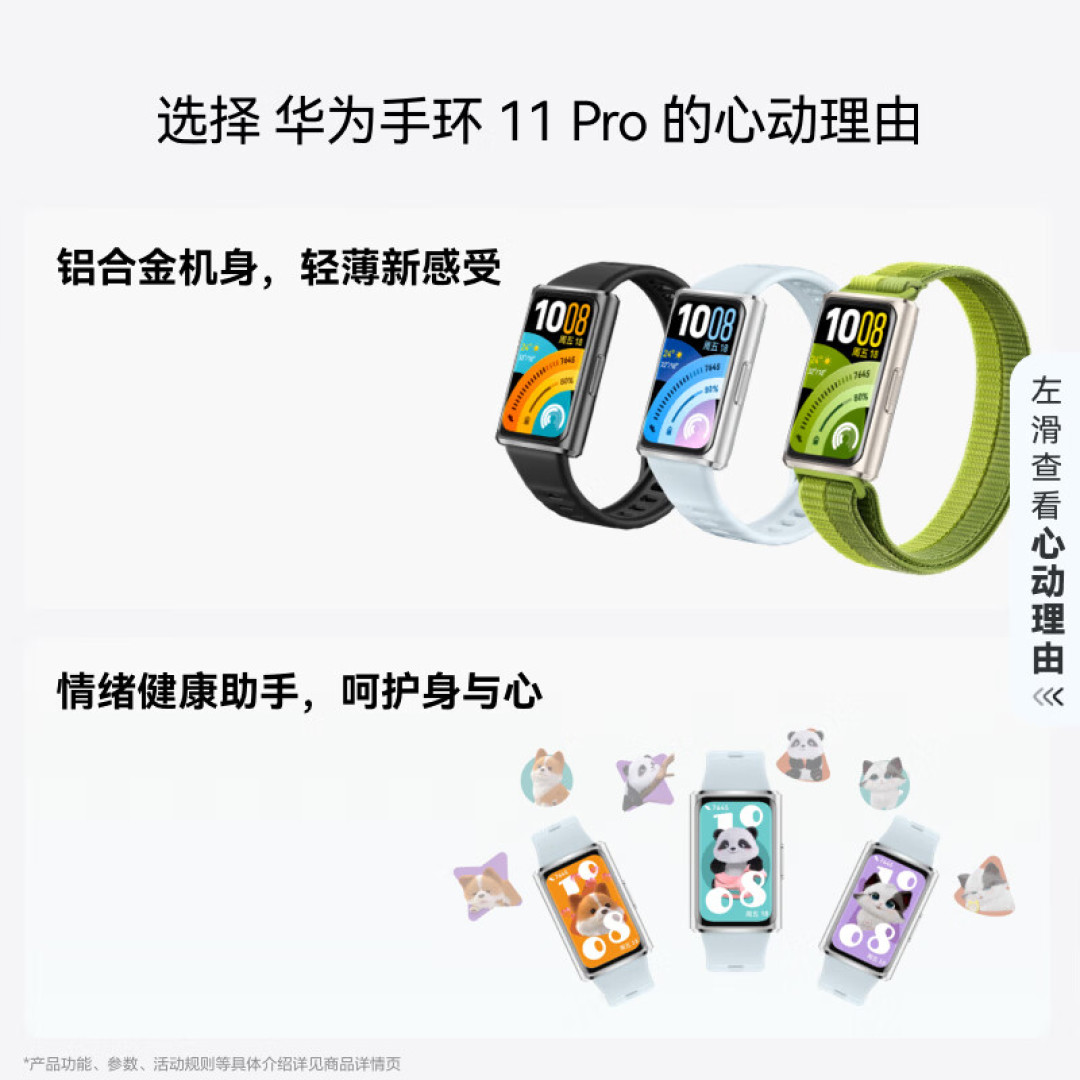 — the NFC version adds door-access, transit and always-on payment; verify you are buying the NFC SKU, since the non-NFC Pro lacks these.
Huawei Band 11 Pro vs Competitors (2026-09 Prices)
| Band | Price (2026-09) | Battery / Weight | Key Difference |
|---|---|---|---|
| Huawei Band 11 Pro NFC (this review) | ¥296.65 | ~14 days / 18g | Standalone GNSS + aluminum case + NFC, 99% JD |
| Huawei Band 11 NFC | ¥239.04 | ~14 days | Same screen/sensors, no standalone GPS, polymer case |
| Huawei Band 11 (base) | ~¥232 | ~14 days | No GPS, no NFC |
| Honor Band 11 Pro | ¥299 | 26 days / 20.2g | 400mAh, longer battery, 115 sports modes |
| Xiaomi Band 10 | ¥289 | 18 days / 15.95g | 1.72-inch flat screen (largest), dual-platform |
| Huawei Fit 4 | ¥300+ | watch-class | Bigger screen, more smartwatch features, higher price |
| Huawei Watch GT 5 | ¥800+ | watch-class | Full smartwatch; site-reviewed separately |
The honest read: at ¥296.65 the Band 11 Pro NFC is the cheapest way to get standalone GPS plus a premium health stack, and its real rivals are the ¥289 Xiaomi Band 10 (bigger 1.72-inch flat screen but no standalone GPS, and arguably a worse fit for Huawei-phone owners) and the ¥299 Honor Band 11 Pro (26-day battery and 115 sports modes, but a heavier 20.2g body and weaker HarmonyOS integration for Huawei phone users). The ¥60 saving on the base Band 11 NFC is the rational choice only if you never exercise phone-free; the Fit 4 and Watch GT 5 only enter the picture when you want a larger screen and true smartwatch functions.
Who Should Buy the Huawei Band 11 Pro
✅ Buy if: you run, cycle or hike and want to leave your phone behind while still logging accurate GPS tracks, you wear a health band 24/7 and want Huawei’s sleep staging, sleep-apnea screening and emotion monitoring, you are a Huawei/HarmonyOS phone owner who wants seamless notifications, payments and remote camera control, or you are downsizing from a smartwatch whose battery and bulk you no longer want — buy at the ¥296.65 NFC-version deal price.
💰 Cheaper alternative: the Band 11 NFC at ¥239.04 covers the same screen, sensors and NFC if you always carry your phone outdoors; below that, the ¥229-232 base versions drop GPS and NFC entirely. If battery life matters more than GPS, the ¥299 Honor Band 11 Pro doubles it to 26 days.
⚠️ Skip if: you never exercise without your phone (save ¥60 with the base NFC model), you have heavy-sweat workouts and worry about aluminum-case oxidation (a documented XHS complaint cluster), you need strong vibration alerts in noisy environments (the motor is weak), or you want a larger screen and app ecosystem — the Fit 4 or Watch GT class is the honest upgrade.
FAQ
Q: Is the Band 11 Pro worth ¥100 more than the base Band 11? A: The ¥100 buys exactly two things: standalone GNSS (record running/cycling/hiking tracks without a phone) and an aluminum-alloy frame instead of polymer. If you exercise outdoors without your phone, the GPS alone justifies the premium — it is the Pro’s whole argument, and XHS’s 923-like thread lands there. If you never will, the base model’s screen and sensors are identical.
Q: What is the difference between the Band 11 Pro and the Band 11 Pro NFC? A: The NFC version (the ¥296.65 unit reviewed here) adds door-access cards, transit cards and always-on/offline payment via Alipay and WeChat Pay. The non-NFC Pro is cheaper but genuinely lacks those features — several XHS reviews complain about the missing NFC on the non-NFC SKU, so check the model code before buying.
Q: How accurate is the GPS for running? A: Owners report fast satellite lock and accurate tracks for running, cycling and hiking, with dedicated track-mode support for stadium loops and running-form analysis (ground-contact time, left-right balance). One SMZDM owner calls it “the cheapest GPS band — way ahead” after using it for phone-free workouts.
Q: Is the aluminum case prone to oxidation as some Xiaohongshu posts claim? A: A minority of owners have posted oxidation and discoloration complaints on the metal frame, typically associated with heavy sweating over months of use. It is a real caveat cluster, not a widespread defect — but if you train hard daily, consider a protective film or the polymer-cased base model, and buy from JD self-operated for after-sales recourse.
Q: How is 99% positive reliable given the return posts on XHS? A: The 99% is the tracked positive rate on the JD self-operated listing and it aligns with the broad XHS record: the band is genuinely well-regarded as the ¥300-class GPS option. The negative threads concentrate on specific issues — vibration motor weakness, occasional sensor over-alerts (which some owners value), and metal-frame oxidation — plus the version confusion between NFC and non-NFC SKUs. Read the model code carefully and buy from JD self-operated.
Q: Does it work with an iPhone? A: Yes, the Band 11 works with iOS via the Huawei Health app, but the deepest integration — live window notifications, remote camera shutter, seamless payment — is reserved for Huawei/HarmonyOS phones. An XHS owner testing it with an iPhone found the core features workable with reduced ecosystem polish.
Rating
- Build quality: 7.8/10 — premium aluminum frame at 18g; documented oxidation risk on the metal case
- Fitness tracking: 8.5/10 — standalone GNSS plus running-form analysis is class-leading at ¥296
- Health monitoring: 8.3/10 — Huawei’s sleep staging, apnea screening and emotion stack; sensors occasionally over-alert
- Value: 8.0/10 — the cheapest standalone-GPS band with NFC when the deal stacks; the ¥239 base undercuts it if GPS is unused
- Overall: 8.0/10 — The ¥300 GPS-band benchmark: buy it for phone-free running and 24/7 health tracking at ¥296.65, skip it if you never leave the phone behind or want weeks-long battery.
Review based on SMZDM deal history (p/181976219 updated September 9, 2026, and wiki-tracked September 10 price of ¥296.65), JD self-operated listing data (99% positive rate), SMZDM wiki product word-of-mouth and Xiaohongshu search results for the Huawei Band 11 Pro as of September 10, 2026. Prices are point-in-time and change with subsidies and coupons.
Not sure which to choose?
Compare specs side-by-side with our Product Comparator Tool
Related Reviews

Amazfit Bip 6 Review: The 10-Day Battery Smartwatch at ¥199
Amazfit Bip 6 has 50,000+ reviews on JD.com with a 4.5/5 rating at ¥199 ($28). Users love the incredible 10-day battery

Amazfit T-Rex 3 Review 2026: The Rugged GPS Watch for Extreme Adventures
Amazfit's T-Rex 3 rugged GPS smartwatch handles extreme outdoor conditions with MIL-STD-810H certification and 30-day ba

Amazfit Helio Ring Review: 24/7 Wearable Health Tracking at ¥1,799
The Amazfit Helio Ring packs sleep tracking, heart rate monitoring, SpO2, and activity tracking into a 3.4g titanium-all

Huawei Smart Glasses 2 Review: Mature Ecosystem in 38g at ¥2,299
Huawei's Smart Glasses 2, co-engineered with Gentle Monster, pack open-ear speakers, dual mics, and gesture controls int

Xiaomi Smart Band 10 Review: The Fitness Band Benchmark at ¥299
Xiaomi Smart Band 10 upgrades to a 1.96-inch AMOLED display, built-in GNSS, and a new BioTracker 5.0 PPG sensor. At ¥299