Logitech GPW3 Review 2026: ¥699 on JD with a 100% Positive Rate — A Chinese Esports Tier-List Verdict
The Logitech GPW3 is ¥699 on JD self-operated with a 100% positive rate on the listing, yet Chinese tier lists file it under B tier as the safe pick rather than the spec king. Two long-form SMZDM verdicts praise the market-proven shell, wrist-friendly weight and well-controlled wireless latency, while warning that 8K polling is wasted without a high-refresh monitor. A balanced, low-risk buy at a fair price — not a hardware flex.
Logitech GPW3 Review 2026: ¥699 on JD with a 100% Positive Rate — A Chinese Esports Tier-List Verdict
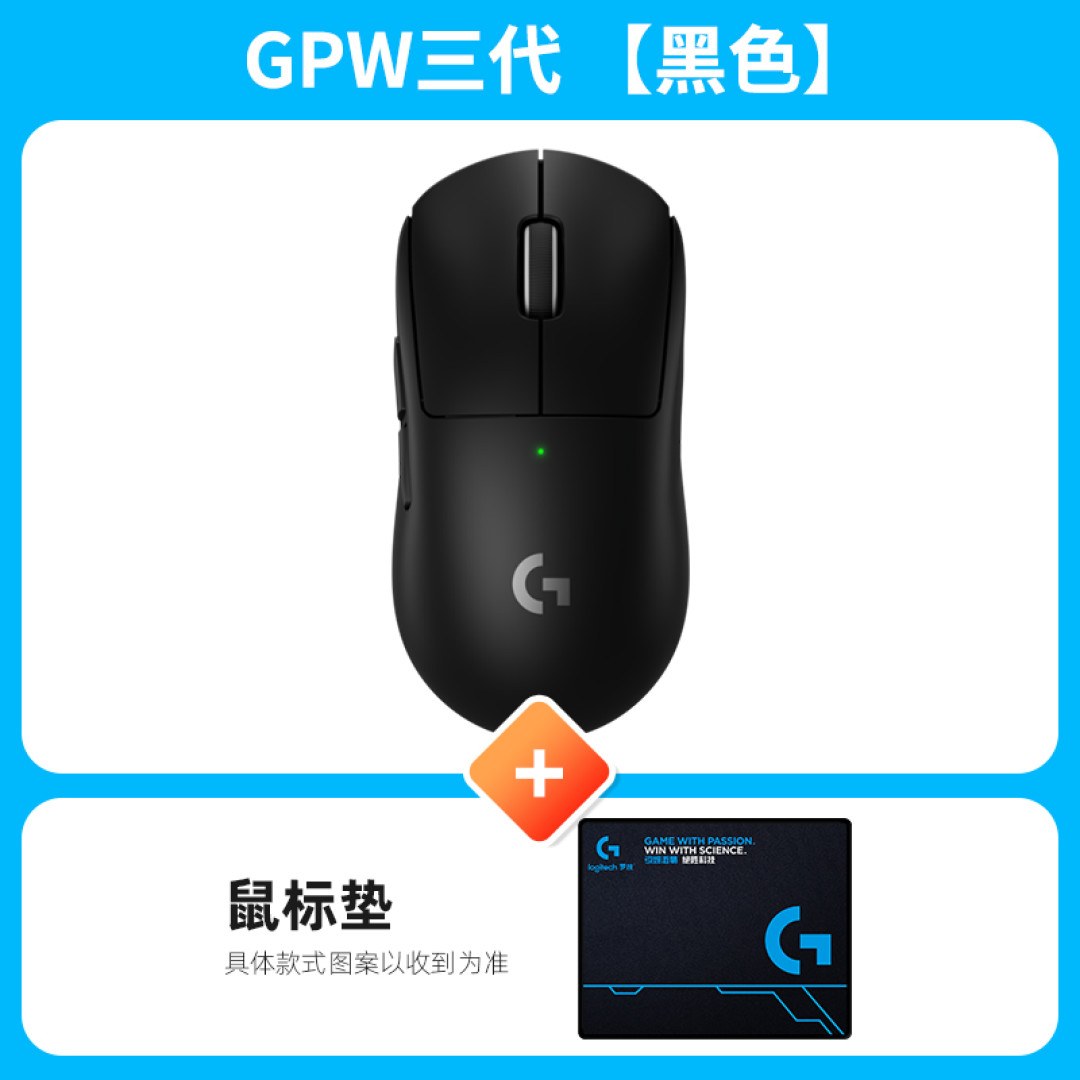
The Logitech G PRO X Superlight 3 — “GPW3” to every Chinese buyer — is selling on JD’s self-operated store at ¥699 as a straight promotional price with no coupon required (price snapshot 2026-10-27), and that listing currently shows a 100% positive rate. That combination is unusual enough to be worth unpacking: a mouse that is neither the newest nor the most aggressively specced in its own family, holding a perfect satisfaction score at a price that undercuts its own successor by hundreds of yuan. The verdict, drawn from how Chinese esports buyers actually rank it, is that the GPW3 is the “safe pick” tier — B tier on the SMZDM ladder, recommended for people who want to stop researching — rather than a specification king. It wins on shape, weight and the fact that nobody has to gamble on it.
This review is built from the two long-form verdicts on the SMZDM product page (the Chinese deal-and-review site known locally as “Zhang Da Ma”), the tier lists those reviewers publish, the SMZDM encyclopedia listing with its deal history and same-price competitor set, and the JD self-operated deal snapshot. Worth stating plainly up front: the SMZDM product page carries exactly 2 long-form verdicts, while the JD listing shows the 100% positive rate. Those are different measurements of different populations, and neither is a thousand-review sample. Both SMZDM write-ups are also flagged on their profiles as “usage duration: not used,” which means they are buying-guide analysis rather than instrumented hands-on testing. That is a real limitation, and it shapes what this review can honestly claim.
The GPW3 keeps the Superlight family shell that Chinese reviewers credit with fitting most hand sizes without wrist strain — the single most repeated reason it lands in the “buy blind” tier.
Specifications
| Specification | Logitech GPW3 |
|---|---|
| Sensor | 32,000 DPI (figure from the same-family JD listing; the brand does not name the sensor model on these pages) |
| Polling rate | Up to 8K Hz over Lightspeed wireless |
| Weight | Lightweight esports class — no gram figure is published on the Chinese listings we tracked |
| Connection | Lightspeed 2.4GHz wireless |
| Price (JD self-operated, 2026-10-27) | ¥699 final, no coupon required |
| JD positive rate | 100% |
| SMZDM long-form verdicts | 2 |
| Chinese tier-list position | B tier — “safe pick,” buy blind |
On price context: the SMZDM encyclopedia page still displays a ¥769 starting figure, and a pink GPW3 colorway is listed separately from ¥615.12. The ¥699 self-operated promotion is the number that matters for a standard purchase: it is below the ¥769 encyclopedia figure, while the ¥615.12 entry is a pink colorway listing rather than the standard mouse. Logitech’s own deal feed around the same window shows the older GPW2 “King Kong” 8K bundle hovering at ¥597.52–699, which tells you how thin the gap between generations has become in China — and why the GPW3 at ¥699 is being read locally as a value play rather than a flagship splurge.
What Chinese Gamers Say
The tier-list position: B tier, and that is a compliment
The most useful artifact in the source material is not a spec sheet but a ladder. SMZDM reviewer @小杨说汽车 sorts the popular esports mice of the moment into six classes, A through F, and places the GPW3 in B:
“B tier — excellent all-round strength, buy it blind: ROG Moon Blade 2 ACE, Logitech GPW3, Sora V2. This whole tier is hot models whose reputations have been tested by the market over a long period. Wireless latency is well controlled, the shell fits most hand sizes, your wrist does not easily ache over long sessions, and they balance feel with stability — they handle every kind of game scenario comfortably.” — SMZDM user @小杨说汽车 (product review)
Takeaway: B tier here means “proven and unremarkable in the right way” — the reviewer’s criteria are latency control, shell fit and long-session comfort, not peak DPI.
The same ladder is instructive about what A tier actually rewards. The A-tier entries are hardware-maximalist: the Razer DeathAdder V4 at 56g with a second-generation Focus Pro 45K sensor and 8K polling but no Bluetooth mode, and a 66g M7 model with a PAW3395, 26,000 DPI, tri-mode connection and a 500mAh battery. Notably, the GPW4 “Eagle Eye” sits below the GPW3 in C tier — evidence that this ranking is about maturity and fit rather than generation number. C tier is described as “capable configs, each with its own highlight,” with the caveat that 8K high-refresh mode comes with limited battery life.
“The Logitech GPW3 is an old-name, popular esports model. Its shell has been tested by the market over a long time, and it is comprehensively balanced with no weak spots.” — SMZDM user @玉儿闲谈 (product review)
Takeaway: “No weak spots” is the entire thesis — this is a mouse bought to end a search, not to win an argument.
Shape and long-session comfort
@玉儿闲谈’s guide argues the buying order should be game genre → sensitivity → grip style → shell → weight → specs, and explicitly warns against inverting it. On grip, the specific mechanical point is that a claw-grip player depends on the support curve of the mouse’s back; if the back height is wrong, the palm hangs in the air and the wrist aches. Palm grip and fingertip grip want completely different shells, and the outer curve is what decides comfort over a long session. The GPW3’s value in that framework is that its shell is the known quantity — the reviewer lists it alongside the LAMZU INCA (rounded body, soft feel, adaptable to several grips) and the Corsair Sabre V2 Pro (side grip texture, fuller button layout, better for larger hands) as one of four mice covering distinct use cases.
The 8K polling reality check
This is where the Chinese consensus gets blunt, and it is the most transferable insight in the whole source set:
“A lot of people who have just got into this immediately fix their eyes on high-end parameters like a 4K polling rate or an 8K polling rate. In reality, if the monitor does not have a high refresh rate backing it up, a high polling rate can barely show its full strength. For ordinary players in daily use, 1K polling is completely sufficient.” — SMZDM user @玉儿闲谈 (product review)
Takeaway: the GPW3’s 8K headline is a capability, not a default — it pays off only behind a high-refresh display, and the reviewer considers 1K adequate for normal play.
The tier list reinforces the cost side of that equation: in the C tier, 8K high-refresh mode is called out for limited battery endurance. So the “up to 8K Hz” figure should be read as headroom you switch into, not a setting you leave on.
Where it loses to cheaper spec-heavy mice
The uncomfortable comparison is the Rapoo VT3s V2 at ¥209 — a PAW3950 engine with tri-mode connectivity, roughly a third of the GPW3’s price. On paper, the spec-per-yuan argument does not favor Logitech at all, and the SMZDM same-price shelf makes the pressure visible: the Razer Viper V3 Pro SE lists from ¥614, the ROG Keris II Ace from ¥949 with 42,000 DPI and 8K polling, and the Logitech G102 Gen 2 from ¥62.09 as a wired budget floor. What the GPW3 sells instead is the thing the reviewers keep returning to — a shell with a long market track record and wireless latency that is described as properly controlled, not merely advertised.
“The mistake in buying is skipping feel and game requirements and going straight to grinding away at hardware parameters. Polling rate and sensor are the icing on the cake; the shell and the feel are the foundation.” — SMZDM user @玉儿闲谈 (product review)
Takeaway: at ¥699 you are buying the calibrated, market-tested foundation — the exact thing a ¥209 spec sheet cannot prove before you plug it in.
And on genre fit, the recommendation for tactical shooters is explicit:
“If you mainly play low-sensitivity FPS games like Valorant and CS2, lean toward a lightweight mouse first. Big flick shots happen constantly, a light mouse puts less burden on your wrist, and you do not get tired easily across a long match.” — SMZDM user @玉儿闲谈 (product review)
Takeaway: the reviewers never quote a gram figure — they talk about a light mouse being the difference between finishing a long match fresh and finishing it sore, and they place the GPW3 on the light side of that line.
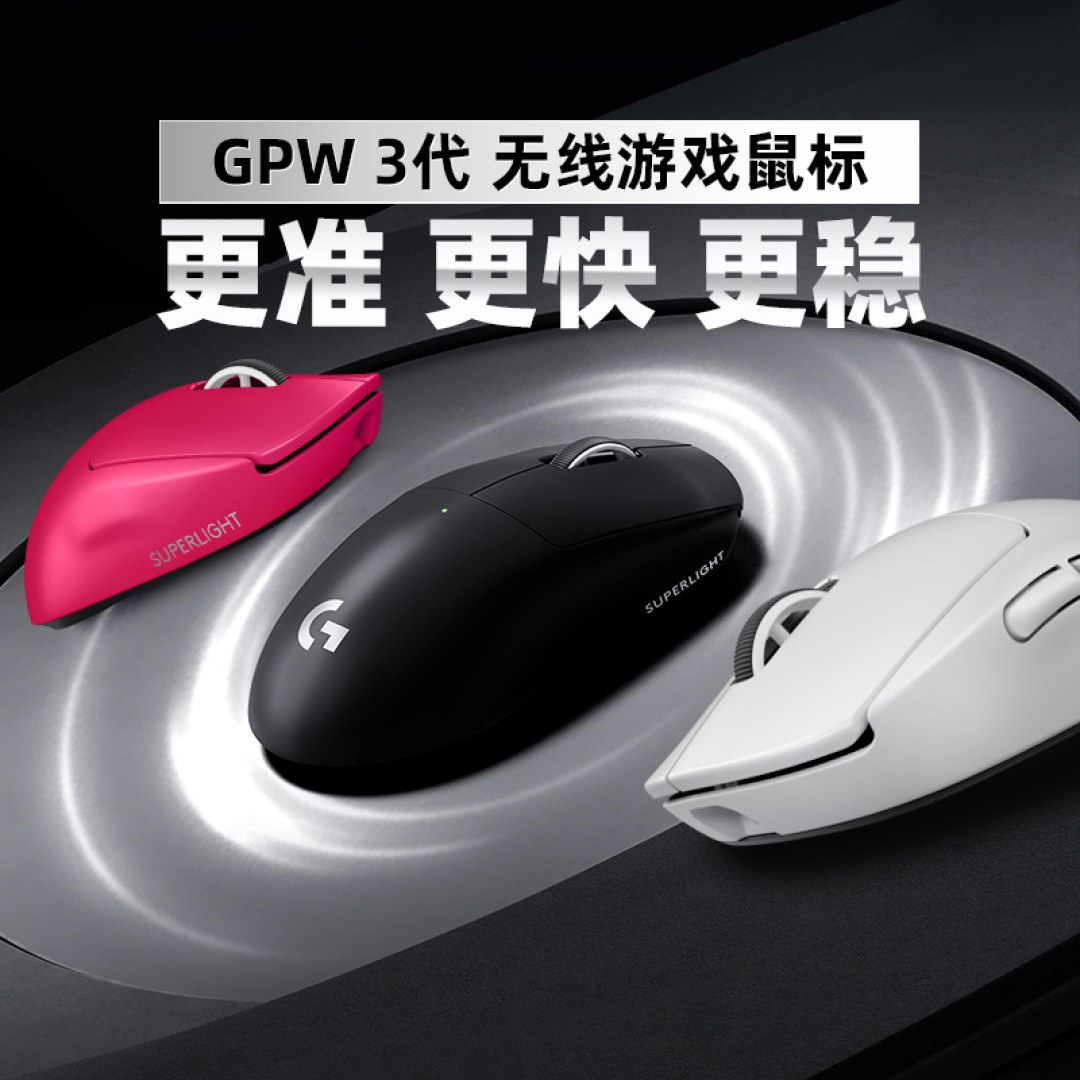
Chinese tier lists score mice on latency control and long-session comfort first — the criteria that put the GPW3 in B tier ahead of its own successor.
Pros and Cons
Pros
- ¥699 final on JD self-operated, no coupon stacking — below the ¥769 encyclopedia starting price and far below the ¥1,051.67–1,259.11 GPW5 Snow Leopard.
- 100% positive rate on the JD listing at the time of the deal snapshot — a clean satisfaction signal for the listing, not a large sample.
- A lightweight shell that matches the source’s explicit advice for low-sensitivity Valorant and CS2 players.
- 32,000 DPI on the listing — comfortably beyond what any 4K or 1440p competitive setup can use.
- Up to 8K Hz polling over Lightspeed 2.4GHz — genuine headroom for high-refresh owners.
- Shell with a long market track record: ranked B tier, “buy blind,” by @小杨说汽车 and called “comprehensively balanced with no weak spots” by @玉儿闲谈.
- Ranks above the GPW4 Eagle Eye in the same reviewer’s ladder — generation number is not the deciding factor here.
Cons
- Exactly 2 long-form SMZDM verdicts, both from profiles marked “usage duration: not used” — thin, analysis-led evidence rather than measured testing.
- Loses the spec-per-yuan fight badly: the Rapoo VT3s V2 offers a PAW3950 and tri-mode connection at ¥209, and the Razer Viper V3 Pro SE is ¥614 with 8K polling.
- No DPI or weight advantage over its own family — the GPW5 Snow Leopard exists above it as the newer flagship, so the GPW3 is a deliberate mid-point, not a peak.
- 8K polling is conditional: the source is explicit that it delivers little without a high-refresh monitor, and the tier list notes 8K mode costs battery life.
- Nothing here is a differentiator on paper — the entire case rests on shape, latency tuning and price, all of which are hard to verify from a spec table.
How It Compares
| Model | Price (CNY) | Weight class | Sensor / DPI | Polling | Connection |
|---|---|---|---|---|---|
| Logitech GPW3 | ¥699 | Lightweight | 32,000 DPI | Up to 8K Hz | Lightspeed 2.4GHz wireless |
| Razer Viper V3 Pro SE | ¥614 | Lightweight class | Not stated in source | 8K | Wireless |
| Logitech GPW5 Snow Leopard | ¥1,051.67–1,259.11 | Flagship class (no figure stated) | Not stated in source | Not stated in source | Dual-mode wireless |
| ROG Keris II Ace (Dragon Scale 2) | ¥949 | Flagship class (no figure stated) | 42,000 DPI | 8K | Wireless |
| Rapoo VT3s V2 | ¥209 | Budget class (no figure stated) | PAW3950 | Not stated in source | Tri-mode |
| Logitech G102 Gen 2 | ¥62.09 | Entry wired | 8,000 DPI | Wired (no figure stated) | Wired |
A note on honesty: the source data states a weight class only for the GPW3 family and gives no sensor figure for the Viper V3 Pro SE or the GPW5 Snow Leopard. Those cells are marked rather than filled with plausible-looking numbers. What the table does show clearly is the shape of the market — the GPW3 sits between a cheaper 8K Razer and a much more expensive in-family flagship, with a ¥209 PAW3950 mouse and a ¥62.09 wired mouse bracketing the whole category from below.
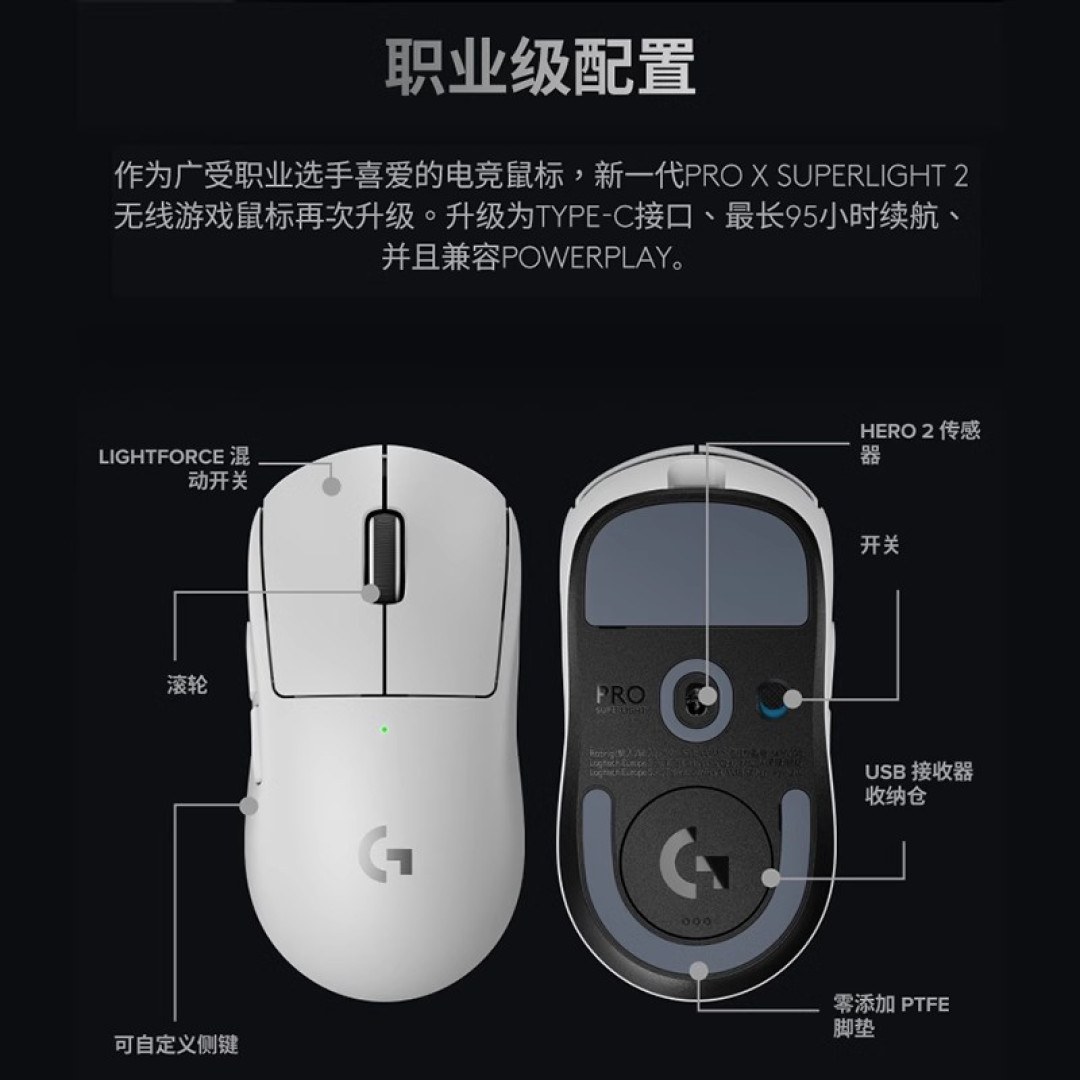
At ¥699 the GPW3 undercuts the GPW5 Snow Leopard by roughly ¥350–560 — the gap that makes the older, proven shell the rational buy.
Who Should Buy It
Buy the GPW3 if you are upgrading from a wired mouse or an older wireless model and you want the decision to be over. The reviewers’ criteria — latency that is “well controlled,” a shell that “fits most hand sizes,” a wrist that does not ache — describe a mouse you stop thinking about, and that is precisely what ¥699 buys here. It is the right pick for a Valorant or CS2 player on low sensitivity who wants a light shell without gambling on an unfamiliar one, and for anyone whose monitor is 144Hz or 240Hz rather than 360Hz+: you will run it at 1K, it will be flawless, and you will have paid for a shape rather than a number. Buying at the ¥699 self-operated price rather than the ¥769 list is the whole arbitrage.
Who Should Skip It
Skip it if you enjoy the spec hunt. The Rapoo VT3s V2 at ¥209 has a PAW3950 and tri-mode connectivity, and the Razer Viper V3 Pro SE at ¥614 pairs 8K polling with a lightweight build for less money — if your satisfaction comes from a spec table, the GPW3 will feel like an overpay and the tier list will not console you. Skip it too if you are chasing the newest in-family flagship and the ¥1,051.67–1,259.11 GPW5 Snow Leopard is within reach, or if you need the 8K mode as a permanent setting rather than a burst — the source flags 8K high-refresh use as a battery cost. And skip it if you want measured, instrumented test data before spending: two long-form verdicts from profiles marked “not used” is the entire Chinese long-form record here.
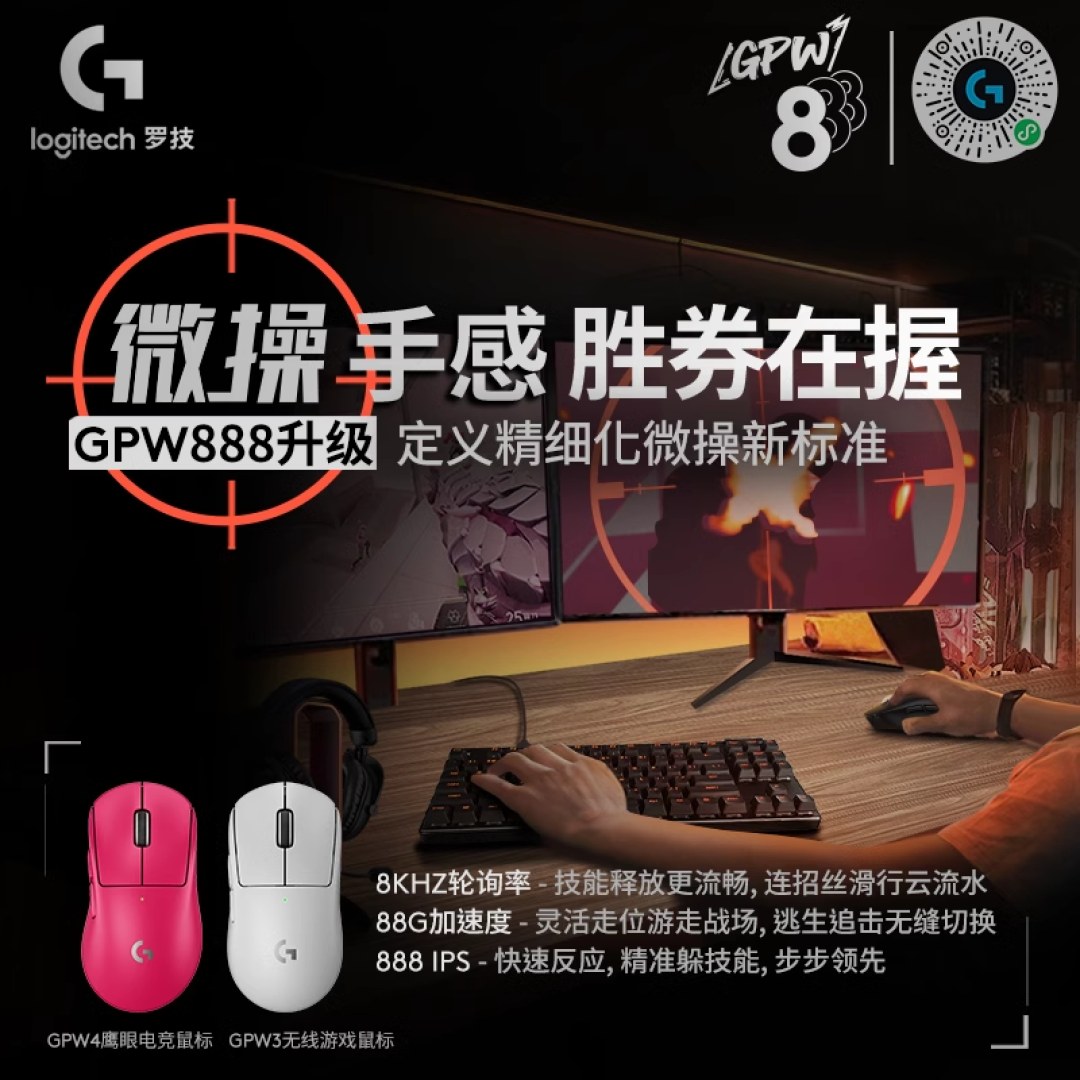
Every spec on this mouse is beatable on paper at a lower price — the case for ¥699 is the shape and the tuning behind it.
Buying Advice
✅ Best Value — Logitech GPW3 at ¥699. The self-operated price is below the ¥769 encyclopedia figure and requires no coupon gymnastics. You get the proven B-tier shell, a light body, a 32,000 DPI sensor and 8K headroom, on a listing showing a 100% positive rate. For most buyers this is the correct stop.
💰 Premium Pick — Logitech GPW5 Snow Leopard at ¥1,051.67–1,259.11. Pay roughly ¥350–560 more for the newer flagship in the same family. Worth it only if “newest in the line” is a requirement you have already decided on; the source gives no performance figure that justifies it on specs alone.
⚠️ Budget Warning — the ¥209 Rapoo VT3s V2 and the ¥62.09 G102 Gen 2 are not substitutes. The Rapoo wins on paper with a PAW3950, but the entire argument for the GPW3 is shell fit and latency calibration, and neither can be read off a listing. The G102 Gen 2 is a wired entry mouse — a fine first purchase, but it is not a competitive wireless replacement. Do not talk yourself into either as a “smarter” version of this purchase.
FAQ
Is 8K polling worth it on the GPW3? Only behind a high-refresh monitor. The source is direct about this: without a high-frame-rate display, a high polling rate “can barely show its full strength,” and for ordinary daily use “1K polling is completely sufficient.” Add the tier list’s note that 8K high-refresh mode limits battery life, and the practical answer is to treat 8K as headroom for competitive sessions, not a setting you leave enabled. If your monitor is 144Hz or 240Hz, you are paying for capability you will not use — which is fine, as long as you know it.
Is the GPW3 good for CS2 and Valorant? Yes — it is the exact profile the Chinese buying guides recommend. Low-sensitivity tactical shooters reward light weight because flick shots are constant and a heavy mouse tires the wrist across a long match; the GPW3 is the lightweight pick in that tier list. It also sits in B tier specifically for controlled wireless latency and a shell that fits most hand sizes, which is the pair of qualities that matters in a tac shooter. The caveat is that its case rests on feel rather than measured latency data, so buy from a seller with returns.
GPW3 or GPW5 Snow Leopard? The GPW3 at ¥699 versus the GPW5 Snow Leopard at ¥1,051.67–1,259.11. The GPW5 is the newer flagship in the same family, and the source lists no specification that would make it faster in practice. The GPW3 additionally outranks the GPW4 Eagle Eye in the SMZDM ladder, which undercuts the “newer is better” logic entirely. Unless you specifically want the newest flagship, the GPW3 is the better use of money — and the saved ¥350–560 buys a lot of mouse pad.
Why does a 100% positive rate not mean a perfect mouse? Because it is a listing-level satisfaction figure on a deal snapshot, not a large review sample. The independent long-form record is exactly 2 SMZDM verdicts, both written as buying guides by profiles marked “usage duration: not used.” Treat the 100% as evidence that buyers at ¥699 are not disappointed, and the tier-list placement as the more informative signal.
Verdict
The GPW3 is the mouse Chinese esports buyers recommend when they want the conversation to end. It is not the spec king — the ¥209 Rapoo VT3s V2 beats it on paper, the ¥614 Razer Viper V3 Pro SE undercuts it with 8K polling, and its own GPW5 Snow Leopard sibling sits above it as the newer flagship. What it has is the thing none of those can put in a table: a shell the market has spent years validating, light weight that the source ties directly to wrist fatigue in long CS2 and Valorant matches, wireless latency described as properly controlled rather than merely advertised, and a ¥699 self-operated price that sits below its own ¥769 list. The 8K polling is real but conditional, and the Chinese consensus is refreshingly unsentimental about it: without a high-refresh monitor it is decoration. Two long-form verdicts is thin evidence, and the perfect JD score is a snapshot rather than a sample — but on the criteria that actually decide whether you keep using a mouse, the B-tier “buy blind” label is earned. At ¥699, this is the low-risk pick, and low risk is worth paying for.
Rating: 8.7/10
Not sure which to choose?
Compare specs side-by-side with our Product Comparator Tool
Related Reviews
8BitDo Ultimate 2C Wireless Controller Review: $25 Precision for PC and Switch
The 8BitDo Ultimate 2C delivers hall-effect joysticks, mechanical buttons, and 2.4GHz wireless for just $24.99. It's the
Ajazz AK820 Pro 75% Keyboard Review: Side Screen Innovation
The Ajazz AK820 Pro stands out with a unique side LCD screen that shows system stats and animations. At ¥169, it offers
Attack Shark R6 Gaming Mouse Review: Budget PAW3395 Contender
The Attack Shark R6 delivers solid PAW3395 performance at ¥149 with TTC switches and a comfortable ergonomic shape, thou
AutoFull M6 Gaming Chair Review: Ergonomic Comfort Without the Racing Seat Tax
The AutoFull M6 gaming chair offers 4D adjustable armrests, a retractable footrest, and breathable mesh back for ¥1,699
Baseus AQY-S2 Gaming Earbuds Review: Low-Latency TWS
The Baseus AQY-S2 offers true wireless gaming earbuds with ultra-low latency mode, 13mm drivers, and excellent battery l