Mijia 1000G Plus Water Purifier Review 2026: RO Value at ¥761 — 98% Positive on JD, But Read the Filter Fine Print
The Mijia 1000G Plus (MR1082-B) is the ¥761-1,225 under-sink RO purifier that SMZDM's deal feed shows at ¥761.38 on Tmall's national-subsidy channel and ¥1,225.76 on JD PLUS (a listing carrying a 98% positive rate) — Xiaomi's classic 1000G single-outlet purifier bringing 2.5L/min-class flow, APP water-quality tracking and five-year RO filter claims to the budget end of the market. Xiaohongshu's 144-like "water purifiers are so hard to choose" thread and the third-party-filter community are the value signals; the 89-like "Xiaomi made me a pure sucker" thread, the "5-year filter used only 1 year?" question and the leak reports are the fine print every buyer must read before trusting the headline price. Here is the honest review.
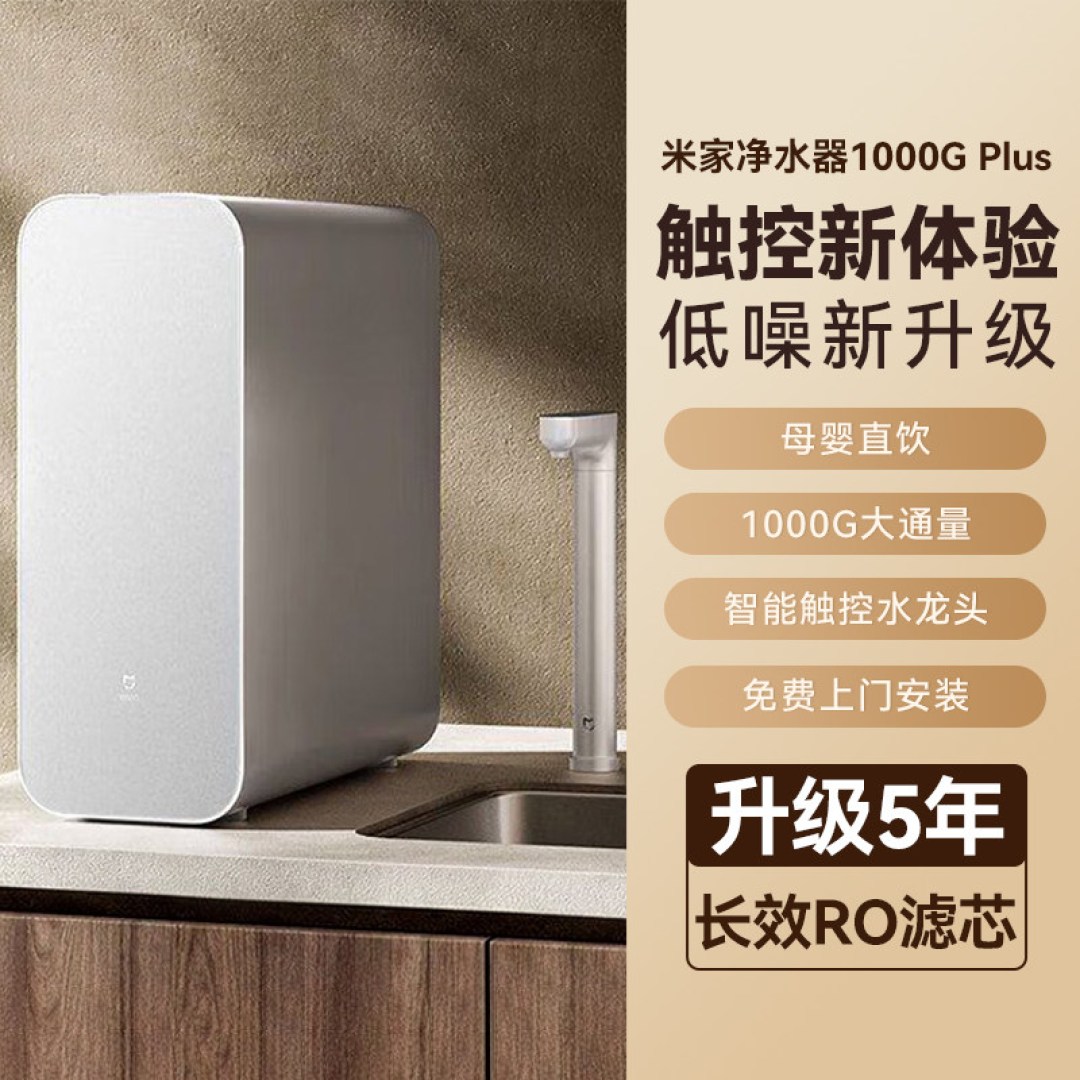
Mijia 1000G Plus Water Purifier Review 2026: RO Value at ¥761
The Mijia 1000G Plus (MR1082-B) is the ¥761-1,225 under-sink RO purifier that answers the question Chinese buyers ask most in the 700-1,300-yuan tier: is Xiaomi”s cheapest big-flow RO still the value king now that the JDZao Baixi, Haier and Midea machines have flooded the same price band — and is the “five-year filter” promise real or marketing? On Tmall the 1000G Plus has hit ¥761.38 through the live-room price plus the national subsidy (a ¥989 live-room price with a ¥100-off coupon stack), while JD PLUS shows ¥1,225.76 on a listing carrying a 98% positive rate; the machine”s own history runs from ¥1,480 (2023 launch-era) down through the ¥1,000-1,100 June-18 levels to today”s sub-¥800 deals. The hardware: 1000G RO reverse-osmosis with fast tankless flow, APP-connected water-quality (TDS) tracking and filter-life reminders, an under-sink installation, and a claimed five-year RO filter. Xiaohongshu”s 144-like “water purifiers are so hard to choose” thread and the 72-like “800G vs 1000G lifetime test” are the honest research posts; the 89-like “Xiaomi made me a pure sucker” thread, the “5-year filter only lasted 1 year?” question, the leak reports and the 33-like “avoid Xiaomi 1000G” warning are the fine print; the third-party filter community (¥100-class replacement cartridges) is the counterweight that keeps total cost of ownership sane. Conclusion: ✅ Best value big-flow RO at ¥761-791 when the subsidy is live for buyers who accept the filter-cost reality; ⚠️ skip if you want zero filter anxiety (buy the JDZao Baixi or a Haier with clearer cartridge economics), or if the leak/QC reports in the community scare you off budget Xiaomi appliances.
Specifications
| Specification | Detail |
|---|---|
| Model | Mijia 1000G Plus MR1082-B |
| Type | Under-sink reverse-osmosis (RO), tankless, single outlet |
| Flow | 1000G class (fast tankless flow, ~2.5L/min) |
| Filtration | RO membrane + pre/post filters; TDS display via APP |
| Filter claims | 5-year RO filter (official) — heavily debated in community |
| Smart | Mijia APP: TDS, filter life, water usage history |
| Installation | Under-sink, standard kitchen fit |
| Platform | Tmall (subsidy) / JD (PLUS) |
| Price (2026-09) | ¥761.38-791.59 (Tmall subsidy) / ¥1,225.76 (JD PLUS) / history ¥1,000-1,480 |
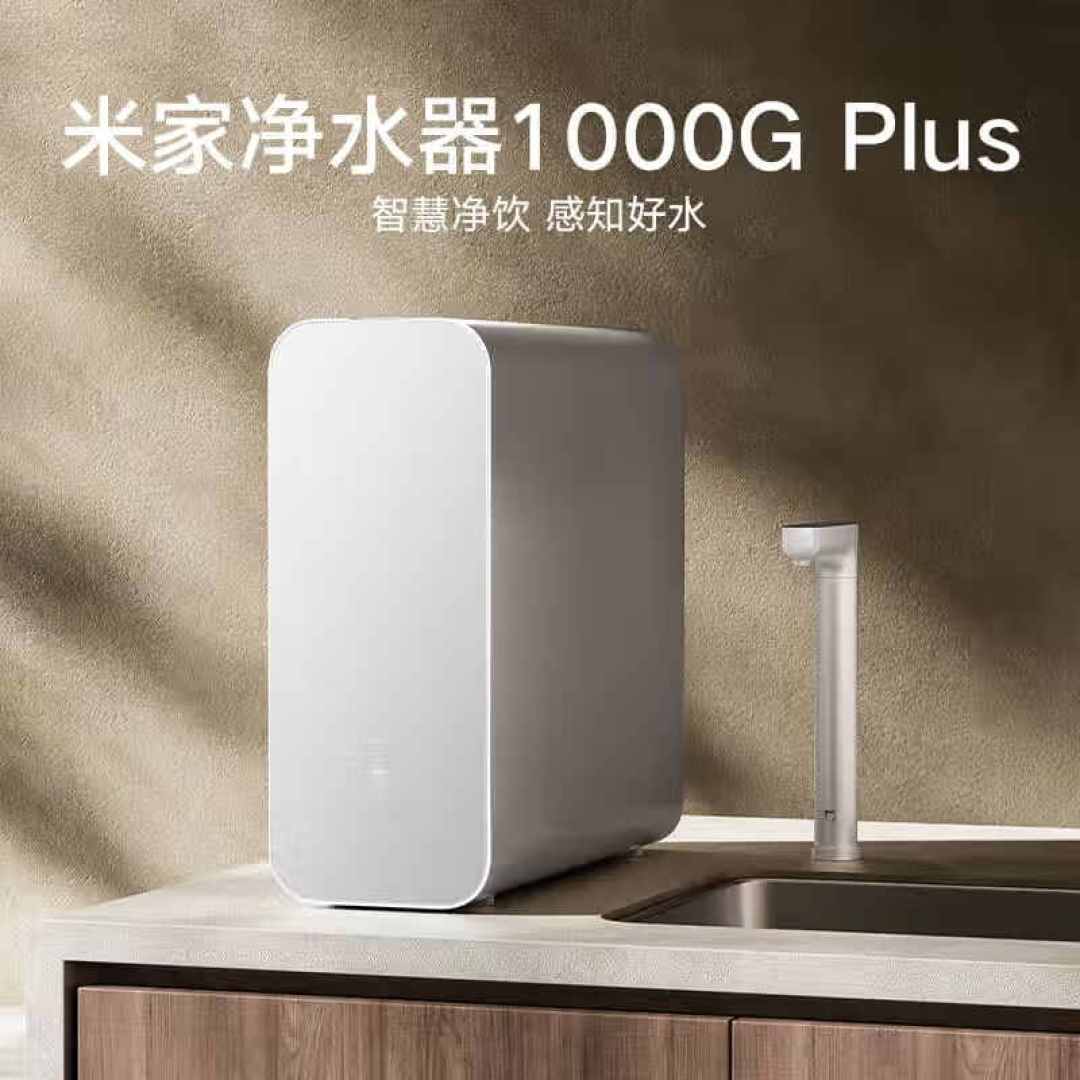 — the Mijia 1000G Plus unit; under-sink RO machines are judged on flow, filter cost and reliability, in that order.
The 1,000-Yuan Question: Cheap RO, Expensive Filters?
The Mijia 1000G Plus sits at the center of China”s most contested appliance category. RO purifiers are now a commodity at the hardware level — every brand sells a 800-1200G under-sink box for ¥600-1,500 — so the real differentiators are filter economics, reliability and the app experience. Xiaomi”s play has always been hardware-at-cost plus an ecosystem: the 1000G Plus at sub-¥800 with subsidy undercuts the Midea and Haier 1200G machines by ¥500-700, and the Mijia APP adds the TDS and filter-life tracking that cheap white-box machines lack.
The catch is the filter — and this is where the community gets loud. The official replacement cartridge is expensive (community reviewers cite the ¥699-class RO cartridge, and the “699 filter is too expensive” comment is a recurring SMZDM refrain). That”s why the third-party filter ecosystem matters so much: Xiaomi”s cartridge design is widely cloned, and the “half” brand and other third-party RO cartridges sell for ¥100-200, which is exactly what the “goodbye to expensive consumables — Mijia 1000G with a third-party RO filter” Xiaohongshu note is about. The 800G-vs-1000G lifetime-test thread (72 likes) does the math both ways: the higher-flow machine is more convenient but the cartridge cost per liter is what actually decides total cost of ownership.
The second catch is the “5-year filter” claim. Xiaomi”s marketing says the RO cartridge lasts five years; the Xiaohongshu community”s lived experience is mixed — “Xiaomi purifier: 5-year filter used only 1 year?” (9 likes, Aug 1), “the 1000G Plus broke after one year” (6 likes) and “the 1000G Plus leaked less than a month after purchase” (2 likes) — while the “avoid Xiaomi 1000G” (33 likes) and “pure sucker” (89 likes) threads document real disappointments. The honest read: RO cartridge life depends entirely on your incoming water quality, and buyers on hard water should budget for a 2-3 year cartridge, not five.
What Chinese Users Say on JD, SMZDM and Tmall
The JDZao comparison dominates. On the JD deal page, the community debate is not Mijia-vs-Midea but Mijia-vs-JDZao: “This one has an anti-scalant — not as good as JDZao” (Chongqing), “Xiaomi has third-party filters” (Jiangsu, the counter), “Xiaomi”s replacement cost is higher anyway, and JDZao uses Dow membranes” (Chongqing) versus “Xiaomi is way better — JDZao is a small-brand OEM” (Guangdong) and “Xiaomi isn”t a big brand?” (Hunan). The JDZao Baixi 800G (reviewed on this site) is the same-price rival with the Dow-membrane story and the 649-yuan price; the Mijia counters with the ecosystem and third-party cartridge market. The 98% positive rate on the JD listing confirms most owners are satisfied, but the comment section shows the value debate is real.
The subsidy geography. “Where do I get the government subsidy?” (Guangdong), “Every night at 8pm on JD” (Xinjiang), “Only Sichuan has it” (Henan) — the subsidy is regional, which explains the ¥761 (subsidy live) versus ¥1,225 (PLUS price) spread. Buyers in subsidy-eligible provinces get the headline price; everyone else pays JD”s ¥1,200+ or waits.
The filter-economics chorus. “At 618 the 1000G was just over ¥1,000 — and honestly, when the RO cartridge dies I”ll just wait for a deal and buy a new machine” (Anhui) is the pragmatic community strategy — at these hardware prices, replacing the whole machine can beat replacing the cartridge. “The ¥699 filter is too expensive” (Shanxi) and the “I bought many Xiaomi products, but the purifier is the one that let me down” (Jiangsu) comment round out the honest negatives.
Verdict from the platforms: the 1000G Plus is a capable, well-priced RO machine — 98% positive on JD, sub-¥800 with subsidy, strong app and a huge third-party filter market — whose real cost story (official cartridge ¥699 vs third-party ¥100-200) and filter-life claims you must evaluate against your water quality. It”s the value pick if you”re comfortable in the Xiaomi ecosystem; the JDZao Baixi is the same-price pick if you want the Dow-membrane story and simpler filter math.
What Xiaohongshu Users Say
The value and confusion posts. “Water purifiers are so hard to choose” (144 likes) is the community”s honest starting point — the category genuinely confuses buyers. “Xiaomi Mijia purifier: avoid the 800G, here”s the 1000G lifetime test” (72 likes) does the real comparative work, and “the Mijia 1000G Plus dropped in price!!!” (15 likes, 2023) shows the machine has been a deal-chasing favorite since launch.
The pain cluster. The negative threads are specific and repeated: “Xiaomi purifier made me a pure sucker” (89 likes, Nov 2024), “Avoid Xiaomi 1000G!” (33 likes), “1000G Plus leaked less than a month in” (2 likes), “1000G Plus broke after a year” (6 likes), “Xiaomi purifier powered off after warranty” (2 likes), and “the 5-year filter only lasted 1 year?” (9 likes). The 18-like “paid ¥240 more than I needed to” thread adds the channel-shopping warning: prices vary wildly between live-room, subsidy and regular channels.
The third-party-filter counterweight. “Goodbye to expensive consumables — Mijia 1000G with third-party RO filter” (3 likes) and the filter-replacement pitfall thread (7 likes) document the ecosystem that makes the machine affordable long-term: ¥100-200 third-party cartridges that fit the Xiaomi housing. This is genuinely unique to Xiaomi among the budget brands — JDZao, Haier and Midea don”t have the same third-party cartridge market — and it”s the strongest argument for the Mijia if you plan to keep the machine for years.
Verdict from Xiaohongshu: the 1000G Plus is a split product — unbeatable hardware value at ¥761-791 with the ecosystem and third-party filters, undermined by a loud QC/durability complaint cluster (leaks, one-year failures, post-warranty power-offs) and filter-life claims that don”t survive hard water. Buy it for the price and the ecosystem; buy from a channel with easy warranty service; and budget for a third-party cartridge from day one.
Mijia 1000G Plus vs Competitors (2026-09 Prices)
| Water Purifier | Price (2026-09) | Key Difference |
|---|---|---|
| Mijia 1000G Plus (MR1082-B) | ¥761.38-1,225.76 | 1000G, APP TDS, third-party filter market, 98% positive on JD |
| JDZao Baixi 800G | ¥649 | Dow-membrane story, 6-year RO, site-reviewed value pick |
| Mijia 2 Pro 1200G dual-outlet (MR12132) | ¥1,087-1,222 | 1200G dual-outlet upgrade, site-reviewed |
| Haier 800G Xianhuo | ¥679.91 | Haier budget RO |
| Haier HKC3000-R816D2U1 1200G | ¥1,174.61 | 1200G with dial display |
| Haier HKC3000-R883D2U1 1400G dual | ¥1,273.66 | 1400G dual-outlet |
| Midea Xinghe 1200G Pro | ¥1,460.84-1,527.3 | Midea premium 1200G |
| Midea Baize 1200G | ¥1,527.3 | Midea classic 1200G |
| Xiaomi MR42 series | ¥873.6 | Newer Xiaomi family |
The honest read: at ¥761-791 with the subsidy live, the 1000G Plus undercuts every comparable big-flow RO — the Mijia 2 Pro 1200G (¥1,087+), the Haier 1200G (¥1,174+), the Midea 1200G (¥1,460+) — by ¥300-700. The only same-band rival is the JDZao Baixi at ¥649, and the choice between them is the classic ecosystem-vs-membrane trade: Xiaomi wins on app, third-party cartridges and brand breadth; JDZao wins on the Dow membrane and simpler filter story. If you want 1200G flow or dual-outlet (pure + filtered water for cooking), step up to the 2 Pro at ¥1,087-1,222 — but for plain drinking water at the lowest entry price, the 1000G Plus is the pick.
Who Should Buy the Mijia 1000G Plus
✅ Buy if: you want the cheapest credible big-flow RO with APP water-quality tracking, you”re already in the Mijia ecosystem, you plan to keep the machine long-term and will use ¥100-200 third-party cartridges (the ecosystem is the real value), or you”re in a subsidy-eligible province where the ¥761 price is live.
💰 Cheaper alternative: the JDZao Baixi 800G at ¥649 if you prefer the Dow-membrane story and simpler filter economics over the Xiaomi ecosystem; or wait for the Mijia 2 Pro 1200G to dip toward ¥1,087 if you want dual-outlet flexibility.
⚠️ Skip if: you”re on hard water and don”t want filter-life surprises (budget for 2-3 year cartridge replacement, not five), the QC complaint cluster (leaks, one-year failures) makes you prefer a brand with stronger service coverage, or the subsidy isn”t live in your province — at the ¥1,225 PLUS price the value case weakens sharply.
FAQ
Q: Does the 5-year RO filter claim hold up? A: Only on good incoming water. The official claim is five years, but Xiaohongshu users on hard water report 1-2 year cartridge life, and the “5-year filter used only 1 year?” thread (9 likes) is the honest counterpoint. Test your water, budget for 2-3 years, and use the APP”s TDS reading to decide when to swap.
Q: Is the official filter really that expensive? A: Yes — community reviewers cite the ¥699-class official RO cartridge, and “the ¥699 filter is too expensive” is a recurring SMZDM comment. The fix: third-party “half” and generic RO cartridges fit the Xiaomi housing at ¥100-200, and the third-party market is the machine”s biggest long-term advantage over JDZao/Haier/Midea.
Q: Mijia 1000G Plus or JDZao Baixi 800G? A: Both sit at ¥650-790. The JDZao Baixi (¥649) offers the Dow-membrane story, simpler filter math and a site-reviewed 6-year-RO value angle; the Mijia 1000G Plus counters with higher flow, the Mijia APP, the huge third-party cartridge market and the 98% positive rate. Xiaomi-ecosystem users buy the Mijia; membrane-story buyers buy the JDZao.
Q: Is the ¥761 price real? A: Yes, but it”s stack-dependent and regional: ¥989 live-room price minus the ¥100-off coupon minus the live subsidy, and the national subsidy is only live in participating provinces. Without the subsidy the machine reverts to the ¥1,200+ JD PLUS level, so confirm your province”s eligibility before ordering.
Rating
7.6/10 — The Mijia 1000G Plus is the strongest big-flow RO value when the subsidy is live: 98% positive on JD, ¥761-791 with subsidy, APP TDS tracking and a genuinely unique third-party cartridge ecosystem that makes long-term ownership affordable. The filter-fine-print reality (¥699 official cartridges, contested 5-year claims), the QC complaint cluster on Xiaohongshu and the subsidy geography keep it from the top tier — buy it for the price and ecosystem, respect the filter math, and it”s the best sub-¥800 big-flow RO available.
Review based on SMZDM deal history and wiki price tracking, JD/Tmall listing data (98% positive rate on the JD listing), and Xiaohongshu search results as of September 6, 2026. Prices are point-in-time and change with subsidies.
Not sure which to choose?
Compare specs side-by-side with our Product Comparator Tool
Related Reviews

Air Fryer vs Oven 2026: Which Is Better for Healthy Cooking?
Air fryer vs oven in 2026: detailed comparison of health benefits, cooking performance, energy efficiency, and cleanabil
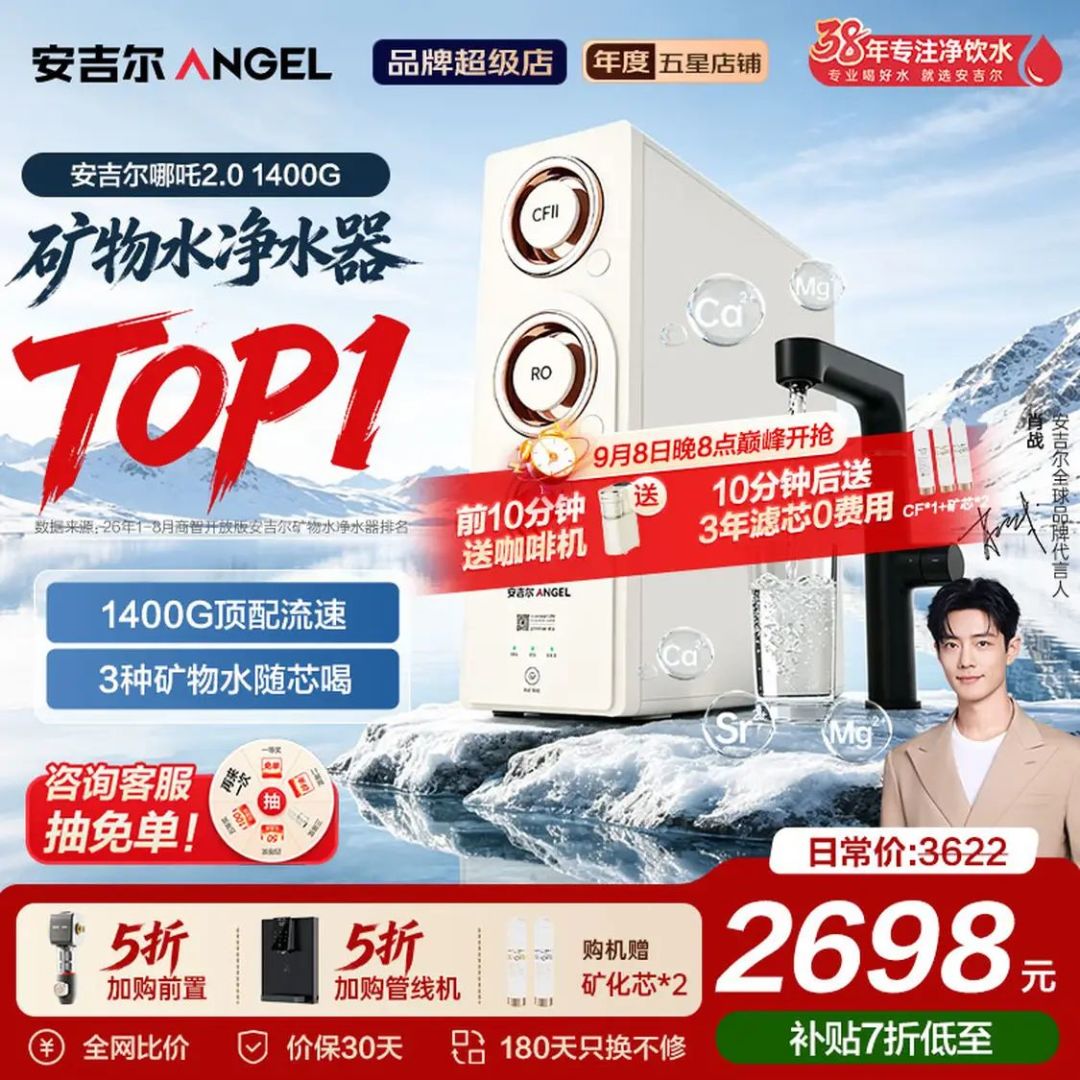
Angel 1400G RO Purifier Review 2026: High-Flow Under-Sink Unit With Heater at ¥2,475 — 99% Positive on JD
The Angel (Anjier) 1400G high-flow RO purifier bundle is the ¥2,475.28 under-sink system that SMZDM's Sep 8 deal feed sh
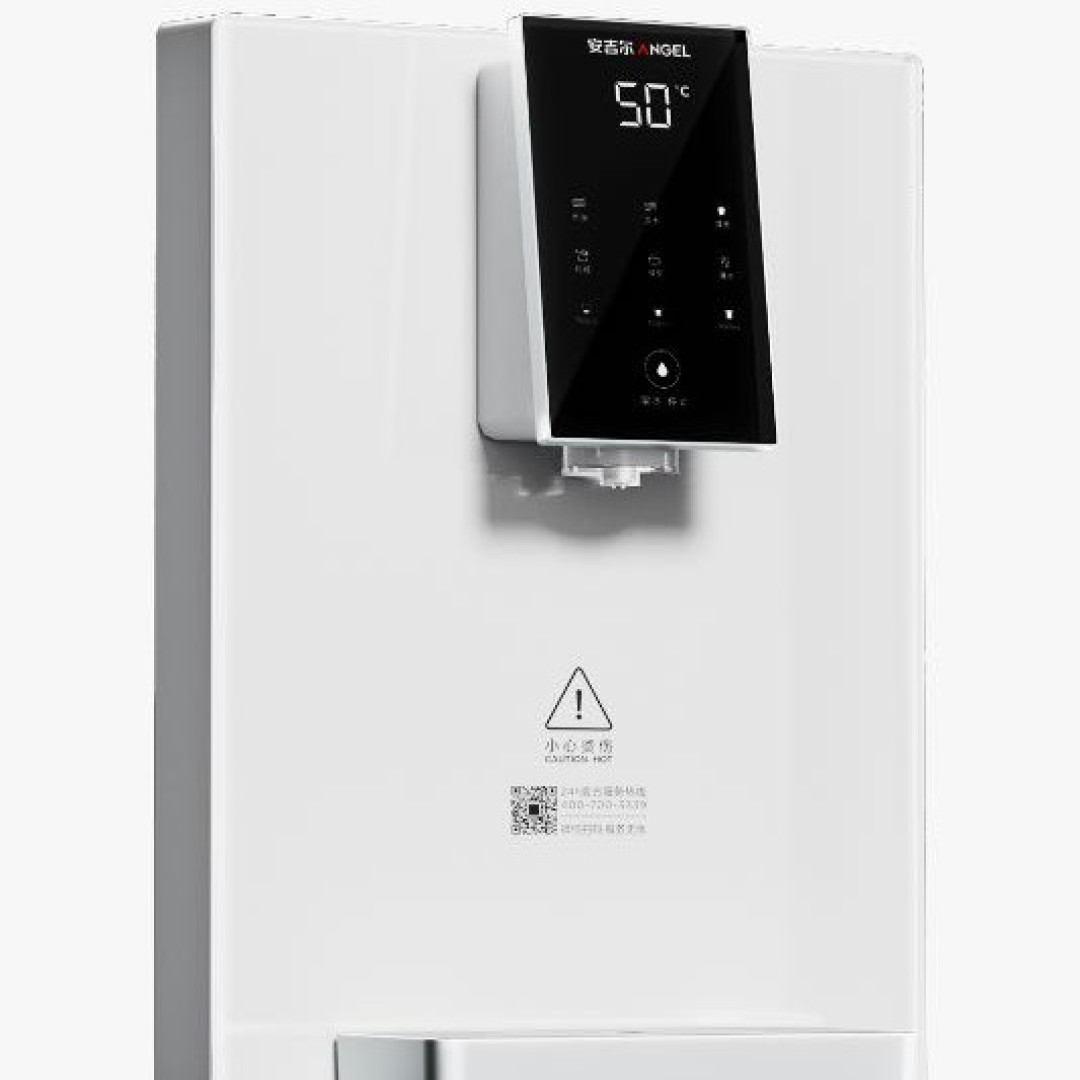
Angel 3611 Wall-Mounted Dispenser Review 2026: Ultra-Slim 6-Temp at ¥639
The Angel 3611 (Y3611BK-G) is the ¥639-1,849 ultra-slim wall-mounted instant-water dispenser that SMZDM's deal history s
Bear 1.7L Stainless Electric Kettle Review: Precision Temperature Control
The Bear 1.7L Stainless Electric Kettle offers 5 precise temperature settings, 304-grade stainless build, and fast 1500W
Bear Mini Rice Cooker 2L Review: Perfect for Singles and Students
The Bear 2L Mini Rice Cooker (DFB-B20A1) offers a compact 2L capacity, 5 cooking functions, and easy storage at ¥129. Pe