PETRUS PE3366 Xiaobai Espresso Review 2026: First Semi-Auto Machine at ¥546 — 99% Positive on JD
The PETRUS PE3366 Xiaobai Xingxing is the ¥546 semi-auto espresso machine on JDs self-operated store (99% positive rate, from ¥593) that has become the default first machine for Chinese coffee beginners — one-button dynamic extraction at 92°C, a steam wand for milk foam and a compact design that dominates Xiaohongshu kitchen corners. Xiaohongshu loves the ¥40-upgrade debate between the base PE3366 and the Pro, but the first-generation steam wands weak foam and no-spare-parts policy are the recurring caveats — this review weighs it against the Xiaomi Mijia at ¥699, the Dolce Gusto pod machine at ¥551.70 and the DeLonghi EM450 at ¥823.65.
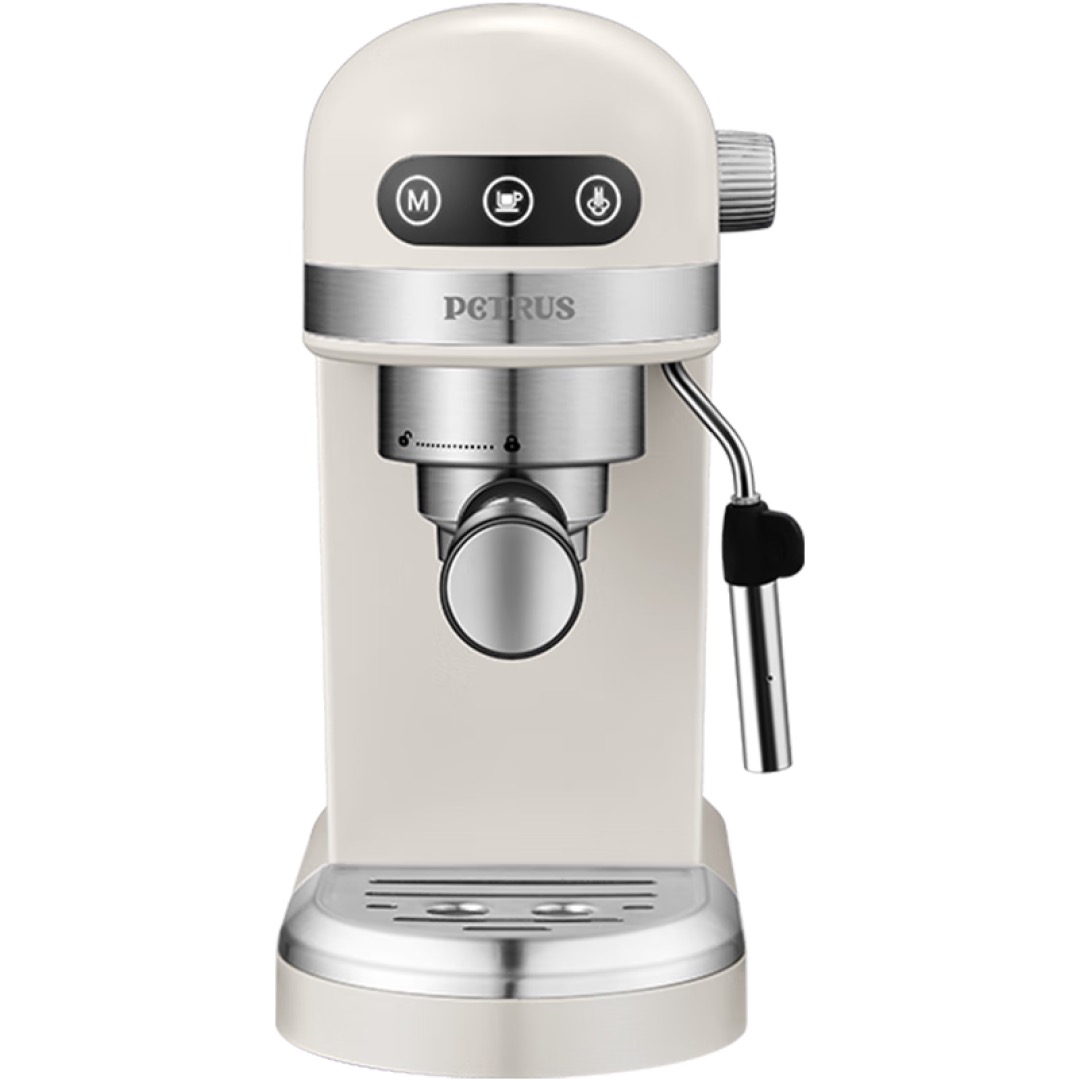
PETRUS PE3366 Xiaobai Espresso Review 2026: First Semi-Auto Machine at ¥546
The PETRUS PE3366 Xiaobai Xingxing (Xiaobai — “Little White Wakes Up”) answers the question that starts most Chinese home-coffee journeys: which machine should a total beginner buy to learn espresso without burning ¥1,000-plus on a machine they might abandon? On JD’s self-operated store the PE3366 is at ¥546 on the September 6 deal feed (SMZDM p/181817648, list ¥593, ¥47 off every ¥480) on a listing carrying a 99% positive rate. For that money PETRUS, the Chinese kitchen-appliance brand founded in 2007 that treats industrial design as its first priority, packs a semi-automatic pump espresso machine with dynamic extraction — the machine auto-adjusts water-to-coffee ratio and extraction time so a first-timer pulls a drinkable shot on day one — a 92°C precision temperature control system, a steam wand for milk foam, and a compact white body that has become one of the most photographed objects in Xiaohongshu’s home coffee corners. The platform’s two loudest debates are the ¥40 question (base PE3366 vs the upgraded Pro) and the steam wand question (first-generation owners who had to hack their wand, versus upgraded-wand owners who can actually texture milk). Conclusion: ✅ the best-priced true semi-auto entry machine for a coffee beginner who wants to learn espresso and milk drinks at ¥546; ⚠️ skip it if you want to pull serious shots daily (the ¥1,200+ Haixian Xiaofang PE3833 or a dual-boiler waits above), if milk-foam texture is your priority (pay for the Pro’s 10mm wand), or if you know you abandon gadgets — this one joins the toaster graveyard if you will not use it.
Specifications
| Specification | Detail |
|---|---|
| Model | PETRUS PE3366 Xiaobai Xingxing semi-automatic espresso machine (base, also sold as PE3366Pro / 3.0 upgraded) |
| Type | Semi-automatic pump espresso machine (thermoblock class), ground coffee + optional capsules via accessories |
| Extraction | Dynamic extraction — auto-adjusts water-to-coffee ratio and extraction time; one-button espresso |
| Water temperature | 92°C precision temperature control |
| Modes | Auto / manual / steam (button menu) |
| Steam wand | Steam wand for milk frothing (first-gen slim wand on base; 10mm thicker wand + horn handle + cup-warming zone on Pro/3.0) |
| Tank | ~1.3-1.5 L class water tank |
| Design | Compact milk-white body; “new national style” high-appearance design |
| Platform | JD self-operated (tracked listing) |
| Price (2026-09) | ¥546 (Sep 6, list ¥593); PE3366Pro 3.0 upgraded ~¥593-636 |
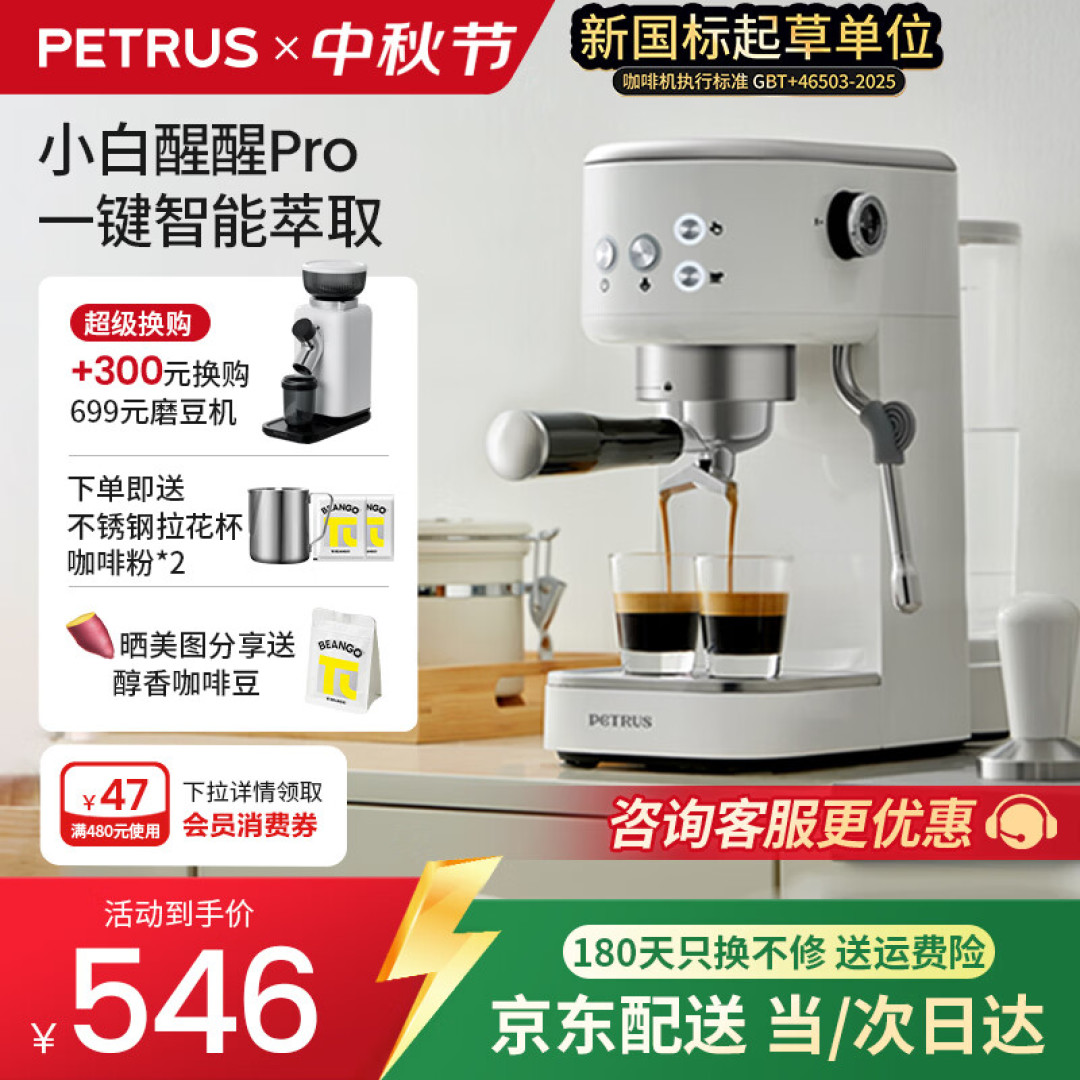 — the milk-white compact body is the reason this machine appears in so many Xiaohongshu kitchen-corner photos; small enough for a one-square-meter coffee corner.
The ¥546 Question: Why the “Xiaobai” Became China’s Default First Machine
PETRUS built the PE3366 around one insight: most Chinese buyers in 2023-2026 are not upgrading from another espresso machine — they are buying their first one, and their fear is not bad coffee but wasted money and a steep learning curve. The Xiaobai Xingxing (the name literally markets itself to beginners) solves that with dynamic extraction: instead of demanding that the user dial in grind, dose and time like a barista, the machine reads the shot and adjusts the water-to-coffee ratio and extraction duration automatically. Press one button and it pulls an espresso that is drinkable — not competition-grade, but a genuinely decent base for a latte or Americano — which is precisely what a beginner needs to build the habit before learning manual control.
The 92°C system and the “second machine” trap. The 92°C precision temperature control sits in the middle of the entry-tier range: cheap thermoblock machines drift several degrees during a shot, while ¥2,000-plus machines hold tight PID control. At 92°C the PE3366 extracts oils without the burnt, over-bitter note that cheaper machines produce when temperature spikes, which is why user reviews consistently describe the espresso as “smooth” rather than harsh. The honest caveat is that this is a thermoblock-style machine with a single boiler — you can pull a shot or steam milk, not both simultaneously — and recovery time between steps matters when making multiple milk drinks. For a one-cup-a-day beginner this is irrelevant; for someone hosting coffee for guests it is the first reason to look at the next tier up.
The PETRUS family ladder is the real buying guide. The PE3366 sits at the bottom of a four-rung PETRUS espresso ladder that SMZDM’s own guides map out: the Xiaobai Xingxing PE3366 at ¥546 (entry), the upgraded Xiaobai Xingxing 3.0/Pro around ¥593-636 (adds the thicker 10mm steam wand, a horn-shaped handle and a cup-warming zone), the Haixian Xiaofang PE3833 at ¥1,201.84-1,309.74 (mid-tier with more extraction control), and the Liuxia 3922 class above ¥1,500 (prosumer). Each rung buys a real, specific improvement — wand thickness, extraction control, boiler class — so the “which PETRUS” question has a clear answer once you know whether you mainly drink straight shots, milk drinks or want to grow into manual dialing.
One listing-identity note. The ¥546 September 6 deal tracks the base PE3366 (/ listing); the same machine is frequently sold in Pro/3.0 clothing at ¥593-636 and in combos with the PE3788 grinder. Match the model code and the wand description when comparing stores — the price gap between the base and the Pro is exactly the ¥40-90 question Xiaohongshu argues about.
What Verified JD Owners Say: Decoding 99% Positive
A 99% positive rate on a ¥546 semi-auto espresso machine is about as high as this category gets — espresso machines usually sit in the mid-to-high 90s because taste is subjective and expectations vary wildly between first-timers and experienced owners. The verified-owner pattern on the PE3366 clusters on four points. First, the appearance and footprint are the most-praised qualities: owners repeatedly describe the milk-white body as beautiful enough to double as decor, and the compact size fits a small counter or a one-square-meter coffee corner. Second, ease of use lands exactly as marketed: “even a coffee novice can use it smoothly” is the recurring line, with one-button extraction and the automatic mode removing the intimidation factor. Third, the milk-drink results surprise owners: “the budget machine can make a good latte” is a genuine theme, with the caveat that foam texture depends heavily on technique (and, on the base model, on the first-generation wand). Fourth, the after-sales and cleaning experience get consistent praise — rinse the group head, wipe the tray, and the machine is low-maintenance.
The caveats in the same reviews are equally specific: the base model’s portafilter basket is described as plastic inside (a durability and heat-retention compromise at this price), the extraction runs a little slowly, steam volume is adequate rather than powerful, and first-generation owners report the steam wand struggles to make fine foam until they learn the disassemble-and-froth trick. None of the tracked feedback describes a systemic failure — the complaints are entry-tier compromises, which is exactly what you would expect at ¥546.
 — dynamic extraction reads the shot and adjusts ratio and time, which is why first-timers get a drinkable espresso instead of a sour mess on day one.
What Xiaohongshu Users Say
The buy signals. The strongest XHS signal is the sheer volume of kitchen-corner and first-machine content: a 1,221-like “the budget coffee machine can also make a good latte (with milk-foam tutorial)” note and a 467-like “latte art Day 7 — textured milk is the prerequisite” progression post show the machine as a gateway into home milk drinks, not a dead end. A 380-like model-comparison chart (“PETRUS coffee machine parameters compared — high-appearance home machines”) helps buyers place the PE3366 against the rest of the family, and a 372-like official new-machine usage video plus a 155-like usage tutorial lower the entry barrier further. The framing that matters most: XHS treats the PE3366 as the machine you buy to learn on — “a hundred-yuan-class machine that can rise to the next level.”
The ¥40 debate and the steam-wand thread are real. Xiaohongshu’s two loudest PE3366 debates are worth reading twice. First, the upgrade question: a 2,106-like note asks “the Xiaobai got an upgraded version — is ¥40 more worth it?” and walks through what the Pro actually adds — a wider cup-warming zone, a horn-shaped handle and the thicker 10mm steam wand — concluding that for milk-drink lovers the wand upgrade alone justifies the ¥40. Second, the first-generation steam wand thread: a 189-like post titled “the first-gen Xiaobai steam wand is disappointing” documents the real owner experience — coarse bubbles no matter the technique, discovering that the outer tube can be removed to finally get fine foam, steam wand spitting water during extraction, and PETRUS customer service refusing to swap the old wand for the new part (“buy early, suffer early”). A 57-like repair thread and a 21-like “broke within a month” note are the minority-defect cluster, and a 27-like “I avoided a pile of hundred-yuan machines and chose the Xiaobai 3Pro” post shows the counterweight — buyers who did the research still land here.
Verdict from Xiaohongshu: the PE3366 is the default first semi-auto machine for Chinese coffee beginners — beloved for its looks, its one-button simplicity and its milk-drink potential — with three standing caveats: pay the ¥40-90 for the Pro’s 10mm steam wand if milk foam matters to you, know that first-generation wand owners had to hack their way to fine foam (and could not get a free replacement), and buy it only if you will actually use it — the semi-auto learning curve is real.
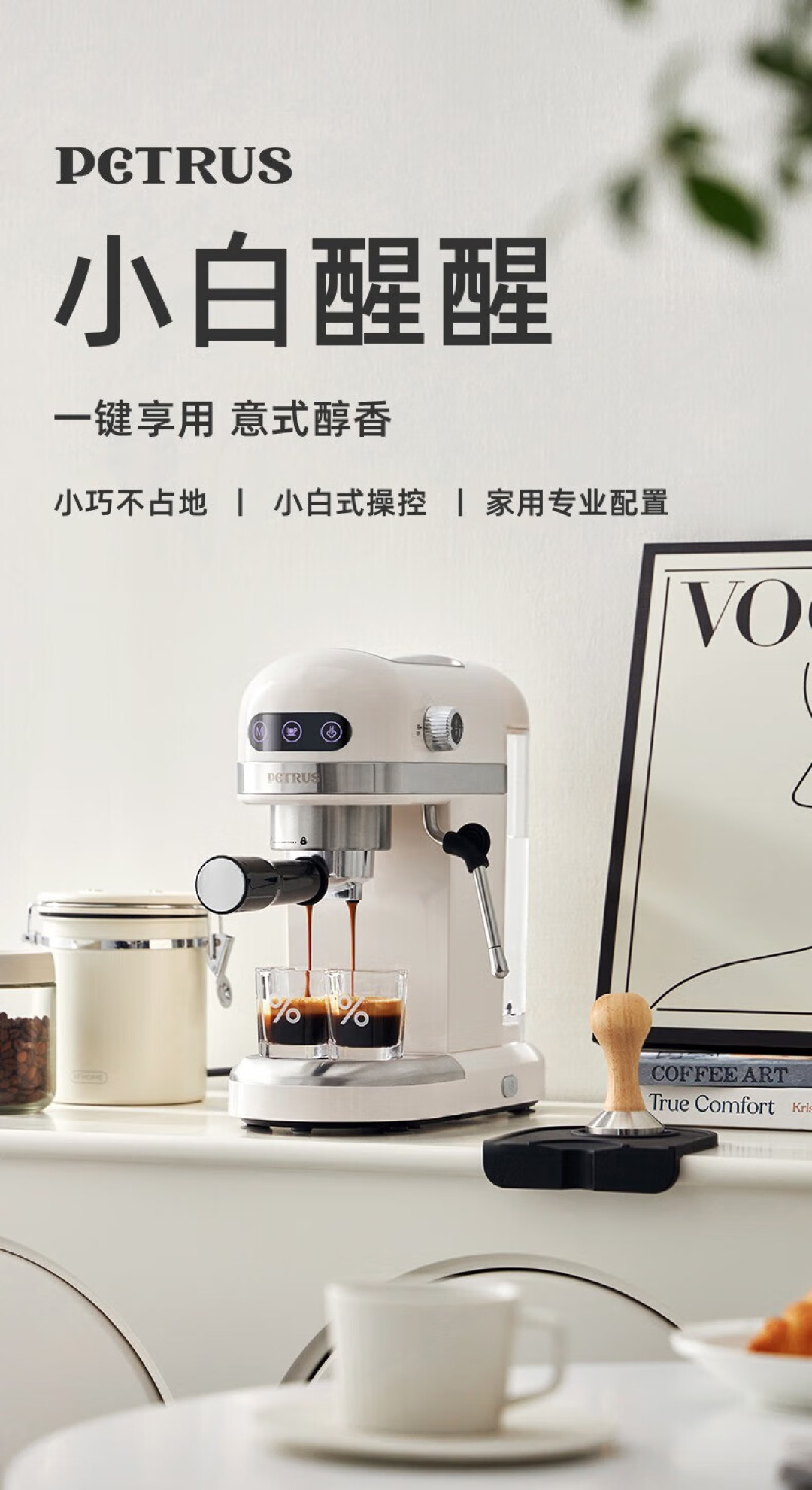 — “the budget machine can make a good latte” is a recurring Xiaohongshu theme; the 1,221-like tutorial proves textured milk is technique, not just hardware.
PETRUS PE3366 vs Competitors (2026-09 Prices)
| Machine | Price (2026-09) | Type | Key Difference |
|---|---|---|---|
| PETRUS PE3366 Xiaobai (this review) | ¥546 | Semi-auto pump espresso | One-button dynamic extraction, 92°C, compact, 99% JD |
| PETRUS PE3366Pro 3.0 upgraded | ~¥593-636 | Semi-auto pump espresso | 10mm steam wand, horn handle, cup-warming zone |
| Xiaomi Mijia Coffee Machine | ¥699 | Semi-auto + capsule | 20-bar, capsule and ground coffee, app control (site-reviewed) |
| PETRUS PE3833 Haixian Xiaofang Pro | ¥1,201.84-1,309.74 | Semi-auto mid-tier | More extraction control, bigger build |
| Dolce Gusto pod machine (Nestlé) | ¥551.70 | Capsule (fully auto) | Pod convenience, no grinding or technique |
| DeLonghi EM450.M | ¥823.65 | Semi-auto pump espresso | Italian brand, grinder-combo option |
The honest read: at ¥546 the PE3366 is the cheapest true semi-auto espresso machine on JD with a 99% positive rate, and its only real rivals in the beginner mind are the ¥551.70 Dolce Gusto pod machine (zero learning curve but locked into pods and weaker espresso) and the Xiaomi Mijia at ¥699 (capsule-plus-ground flexibility with app control, but less of a “learn espresso” machine). Step up to the DeLonghi EM450 at ¥823.65 for an Italian badge and a grinder-combo path, or to the PETRUS PE3833 at ¥1,200-plus when extraction control starts to matter. Within the PETRUS family, the ¥40-90 Pro upgrade is the single most rational spend for milk-drink lovers.
Who Should Buy the PETRUS PE3366
✅ Buy if: you are a coffee beginner who wants to learn espresso and milk drinks without a ¥1,000-plus commitment, you drink one or two cups a day and value one-button simplicity over manual dialing, you want a compact machine that looks good on a small counter, or you are buying a first gift machine for a coffee-curious partner — buy at the ¥546 deal price, and pay the small premium for the Pro’s steam wand if you mainly drink lattes and cappuccinos.
💰 Cheaper alternative: the ¥551.70 Dolce Gusto pod machine removes all technique if you value convenience over espresso education; below both, instant coffee or a ¥50 moka pot covers caffeine at near-zero cost. If you know you will not learn to steam milk, do not buy any semi-auto.
⚠️ Skip if: you want serious, repeatable shot quality (the PE3833 at ¥1,200+ or a dual-boiler above ¥2,000 is the honest answer), you need to pull shots and steam milk simultaneously for guests, fine milk-foam texture is your priority (buy the Pro, not the base), or you have a history of abandoning kitchen gadgets — the semi-auto learning curve means this machine rewards daily use and punishes neglect.
FAQ
Q: Is the PE3366 the same as the PE3366Pro / Xiaobai Xingxing 3.0? A: They are the same machine family, not the same SKU. The base PE3366 (the ¥546 deal here) has the first-generation slim steam wand. The Pro / 3.0 versions, usually ¥40-90 more, add a thicker 10mm steam wand, a horn-shaped portafilter handle and a cup-warming zone. For milk-drink lovers the Pro’s wand is worth the premium; for straight espresso or Americano drinkers the base is most of the experience.
Q: I heard the first-generation steam wand cannot make fine foam. Is that true? A: This is the most documented PE3366 complaint on XHS. Many first-generation owners found their milk foam stayed coarse no matter the technique, then discovered that removing the outer tube of the wand allows fine foam (a community-shared hack). PETRUS customer service reportedly refused to swap the old wand for the new part on request. The upgraded Pro/3.0 wand solves this properly — if milk drinks are your goal, buy the Pro and skip the hack.
Q: Semi-auto, capsule or fully-auto for a ¥500-700 beginner budget? A: If you want to learn espresso and are willing to practice, the PE3366 semi-auto at ¥546 (or its Pro version) is the best value and the most educational. If you want zero learning curve and drink mostly milk or flavored drinks, a Dolce Gusto-style pod machine at ~¥551.70 is more foolproof but locks you into pods. If you want capsule-plus-ground flexibility with app control, the Xiaomi Mijia at ¥699 bridges both. The deciding question is whether you want a hobby (semi-auto) or a beverage (pods).
Q: Does the PE3366 need a grinder? A: For best results, yes — fresh ground coffee matters more than the machine. PETRUS sells the PE3788 grinder in combo bundles, and many owners pair the machine with a hand grinder or an entry electric one. Pre-ground espresso-fine coffee works but goes stale fast; the dynamic extraction compensates for some inconsistency, which is one reason beginners succeed on this machine.
Q: How is 99% positive reliable given the steam-wand complaints on XHS? A: The 99% is the tracked positive rate on the JD self-operated listing, and it aligns with the broad XHS record: the machine is genuinely loved as a first espresso maker, and most complaints concentrate on the specific first-generation wand issue (fixed in the Pro) plus the expected entry-tier compromises. The minority defect cluster (repair threads, a “broke within a month” note) is why you should buy from JD self-operated for after-sales recourse.
Q: Can I make a latte or cappuccino with it? A: Yes — that is the machine’s main use case. Pull the espresso via the one-button auto mode, then steam and texture milk with the wand. The 1,221-like XHS tutorial demonstrates a genuinely good latte from this class of machine; just expect the wand technique (angle, air intake, temperature) to take a few sessions to learn — or buy the Pro version with the thicker wand for an easier start.
Rating
- Build quality: 7.5/10 — attractive, compact, reliable for the class; plastic-inside portafilter is the giveaway
- Espresso quality: 7.8/10 — dynamic extraction and 92°C control deliver smooth beginner-friendly shots
- Milk steaming: 7.0/10 — workable on the base wand with technique; the Pro’s 10mm wand fixes the class’s main flaw
- Value: 8.3/10 — the cheapest true semi-auto entry with a 99% JD positive rate at ¥546
- Overall: 7.9/10 — The beginner semi-auto benchmark: buy the ¥546 Xiaobai to learn espresso and milk drinks, spring for the Pro’s wand if foam matters, and skip it if you will not use it.
Review based on SMZDM deal history (p/181817648, updated September 6, 2026), JD self-operated listing data (99% positive rate, ¥546), SMZDM wiki product word-of-mouth and Xiaohongshu search results for the PETRUS PE3366 as of September 10, 2026. Prices are point-in-time and change with subsidies and coupons.
Not sure which to choose?
Compare specs side-by-side with our Product Comparator Tool
Related Reviews

Air Fryer vs Oven 2026: Which Is Better for Healthy Cooking?
Air fryer vs oven in 2026: detailed comparison of health benefits, cooking performance, energy efficiency, and cleanabil
Angel 1400G RO Purifier Review 2026: High-Flow Under-Sink Unit With Heater at ¥2,475 — 99% Positive on JD
The Angel (Anjier) 1400G high-flow RO purifier bundle is the ¥2,475.28 under-sink system that SMZDM's Sep 8 deal feed sh
Angel 3611 Wall-Mounted Dispenser Review 2026: Ultra-Slim 6-Temp at ¥639
The Angel 3611 (Y3611BK-G) is the ¥639-1,849 ultra-slim wall-mounted instant-water dispenser that SMZDM's deal history s
Bear 1.7L Stainless Electric Kettle Review: Precision Temperature Control
The Bear 1.7L Stainless Electric Kettle offers 5 precise temperature settings, 304-grade stainless build, and fast 1500W
Bear Mini Rice Cooker 2L Review: Perfect for Singles and Students
The Bear 2L Mini Rice Cooker (DFB-B20A1) offers a compact 2L capacity, 5 cooking functions, and easy storage at ¥129. Pe