Rinnai 16GD33 Gas Water Heater Review 2026: Japanese Precision at ¥2,786
The Rinnai 16GD33 (JSQ31-GD33) is the 16L Japanese-brand gas water heater that trades flashy features for precision constant temperature — ¥2,786.23 on JD with subsidy stack, a 51-day low. SMZDM's buying guide puts Rinnai's water-servo constant temp and 28nm CPU in the "Japanese durability" tier alongside Noritz and A.O. Smith; Xiaohongshu owners love the stable temperature but the "installation assassin" threads warn about accessory fees. Here is the honest review.
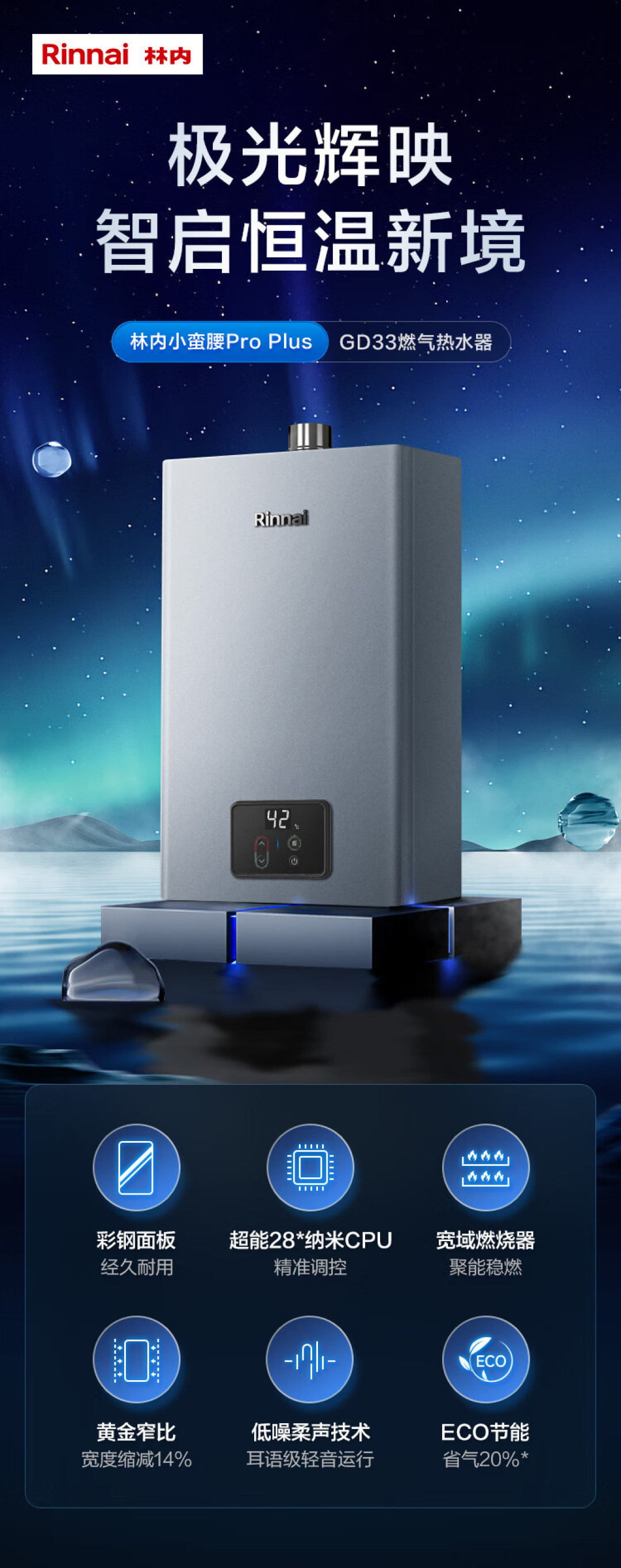
Rinnai 16GD33 Gas Water Heater Review 2026: Japanese Precision at ¥2,786
The Rinnai 16GD33 (JSQ31-GD33, “Aurora Gray”) is the 16L gas water heater for buyers who trust Japanese engineering over feature lists. On JD it’s been selling at ¥2,786.23 with the subsidy stack (list ¥4,099 — the deal applies a ¥50 cut, a 10% discount, the 15% national subsidy, and a 4% trade-in, making it a 51-day low). The GD33 runs Rinnai’s water-servo constant-temperature core with 0.5°C adjustment precision — the same philosophy as the flagship Xiaomanyao MAX (16GD72, ¥4,499) but without the 28nm CPU and gold-ratio chassis. SMZDM’s 12-model July guide puts Rinnai in the “Japanese quality, reliable and durable” tier with Noritz and A.O. Smith, and calls its constant-temp accuracy “industry-admired.” Xiaohongshu’s 235-like “Rinnai use & installation manual” and 156-like “is Rinnai really good? 12 hot models” threads anchor the brand’s reputation; the 142-like “never buying Rinnai again” and 54-like “Rinnai is indeed an installation assassin” threads are the caveats. Conclusion: ✅ Best pick for buyers who value constant-temperature precision and decades of Japanese durability over gimmicks, with budget for install accessories; ⚠️ the install fees and the premium over domestic rivals are the real costs.
Specifications
| Specification | Detail |
|---|---|
| Model | Rinnai 16GD33 (JSQ31-GD33), Aurora Gray |
| Capacity | 16L, natural gas |
| Constant temp | Water-servo constant temperature |
| Adjustment | 0.5°C precise temperature adjustment |
| CPU | Rinnai precision control (flagship uses 28nm imported CPU) |
| Design | Japanese slim chassis |
| Price (Aug 2026) | ¥2,786.23 JD stacked (08-04, 51-day low); list ¥4,099 |
| JD listing | JD self-operated, 25+ related articles |
What Chinese Users Say
Rinnai occupies a unique position in the Chinese gas-water-heater market: it’s the brand buyers default to when they’ve been burned by cheap units, and the one XHS threads treat with a mix of reverence (“Japanese durability”) and frustration (“installation assassin”). The GD33 sits at the entry of the 16L Rinnai range, so the conversation is about whether Rinnai’s precision justifies the premium over Midea/Haier.
The Japanese Precision Argument
“If you trust the stability and durability of Japanese brands, Rinnai’s constant-temperature accuracy is well-regarded — water-servo control with 0.5°C adjustment, compact body, Japanese quality with worry-free after-sales.” — SMZDM 12-model guide, Rinnai buying rationale (2026-07-17)
“Rinnai water heaters: 13L or 16L? How to choose constant-temp tech? — the two questions every Rinnai buyer gets stuck on.” — SMZDM Rinnai buyer guide (2026, arz074wz)
“Rinnai gas water heater use and installation manual.” — Xiaohongshu user @Jianwangzheng (235 likes, 2025-08-23)
The core Rinnai pitch is precision, not features: water-servo constant temperature holds the set point when other taps open or close, and 0.5°C adjustment is finer than most domestic rivals’ 1°C steps. SMZDM’s guide explicitly places Rinnai in the “Japanese quality, durable, after-sales worry-free” tier — the same tier as Noritz and A.O. Smith. The 235-like manual thread and 156-like “12 hot models” thread show the buyer education demand around the brand’s model naming (GD33 vs GD72 vs GC23), which is genuinely confusing.
The Installation Assassin Problem
“Rinnai is indeed an installation assassin.” — Xiaohongshu user @Xixi Nazhale (54 likes, 2025-09-19)
“Don’t be a sucker installing Rinnai — bring your own accessories, save 600+, price list attached.” — Xiaohongshu user @XiaoC French Vintage Home (152 likes, 2026-06-21)
“The first installation assassin has appeared.” — Xiaohongshu user @Renovation Newbie (47 likes, 2025-06-03)
“Rinnai installation: bringing your own valves and flue isn’t enough!” — Xiaohongshu user @Return 0; (45 likes, 2025-10-16)
This is the single biggest Rinnai complaint on XHS: installation accessory fees. The pattern across the “assassin” threads: the machine’s install is free, but valves, flue pipe, elbows, and connectors add ¥300-600+; the 152-like thread itemizes a full price list showing owners saving ¥600+ by bringing their own accessories. The 45-like thread adds the nuance that some installs need more than just valves and flue (e.g., a bypass valve or extra pipe). Confirm the install scope in writing, and ask for the fee schedule before the technician arrives.
Mixed Long-Term Experiences
“Rinnai water heater — I will never buy it again.” — Xiaohongshu user @Jiaojiao (142 likes, 2025-10-23)
“I, the Rinnai sucker…” — Xiaohongshu user @Star Yiyayi (36 likes, 2025-06-21)
“This kind of heater gets scalding hot in summer — what do I do?” — Xiaohongshu user @TUT (6 likes, 2026-06-14)
The negative threads split between install-cost rage and a minority of functional complaints (summer scalding when the minimum fire rate is too high — the classic gas heater issue; some service complaints). The summer-scalding thread matters: gas heaters with too-high minimum fire output produce near-boiling water in summer when the tap water is already warm. Rinnai’s 0.5°C water-servo helps, but confirm the model’s minimum-output behavior for summer use, especially in southern China.
The Brand Premium Question
The GD33 at ¥2,786 sits ~¥1,300-1,500 above the Midea Anshui M9 Max (¥1,459) and slightly above the Haier KL7S (¥2,704). What the premium buys: Rinnai’s decades of combustion engineering, the water-servo constant-temp precision, and the “Japanese durability” reputation that SMZDM’s guide explicitly endorses. What it doesn’t buy: super-tier-1 efficiency, turbo boost, or first-tier quiet certification — Rinnai leaves those feature wars to domestic brands and competes on reliability and precision instead. For owners who plan to keep a heater 10+ years, that trade-off is defensible; for feature-maximizers, the Midea M9T Max or Haier KL7S is more spec per yuan.
Pros & Cons
Pros:
- Water-servo constant temperature with 0.5°C precision — holds set point under multi-tap use
- Japanese engineering reputation for 10+ year durability
- Compact Japanese slim chassis for tight installs
- JD price ¥2,786 is a 51-day low (list ¥4,099)
- 25+ SMZDM articles and deep buyer-guide coverage
- Nationwide Rinnai service network
Cons:
- Installation accessories routinely cost ¥300-600+ — the #1 XHS complaint
- No first-tier quiet certification (vs Midea Anshui / Haier KL7)
- No turbo boost for low water pressure
- Premium over domestic rivals: ~¥1,300+ vs Midea M9 Max
- Some summer-scalding and service complaints in XHS threads
- Model naming (GD33/GD72/GC23) is confusing for first-time buyers
vs Competitors
| Spec | Rinnai 16GD33 | Midea Anshui M9 Max | Haier KL7S | Noritz Xiaoyunduo UP |
|---|---|---|---|---|
| Capacity | 16L | 16L | 16L | 16L |
| Constant temp | Water-servo, 0.5°C | Auto adjust | 7A + AI dual-loop | Water-servo Plus |
| Quiet | Standard | First-tier | First-tier, 36dB | Dual first-tier |
| Boost | No | No | TSI 200% | Water-servo Plus |
| Price (Aug 2026) | ¥2,786 | ¥1,459 | ~¥2,704 | ¥4,998 |
The GD33 is the value entry to the Japanese tier — ¥2,200 below the Noritz Xiaoyunduo UP (¥4,998) while sharing the water-servo approach. Against domestic rivals, the Rinnai trades features (quiet cert, boost, efficiency) for precision and durability. Haier KL7S is the closest domestic comparison at a similar price with more features; the Rinnai wins on brand longevity.
FAQ
Q: What does “water-servo” constant temperature actually do? A: A water-servo valve continuously adjusts water flow to hold the set temperature when other taps open/close or pressure fluctuates. The GD33 pairs it with 0.5°C adjustment steps — the precision tier that SMZDM’s guide says is “industry-admired” in Japanese units.
Q: Is the installation really that expensive? A: Machine install is free, but accessories (valves, flue, elbows, connectors) routinely add ¥300-600+ — XHS’s “installation assassin” threads document it, and the 152-like thread shows owners saving ¥600+ by bringing their own accessories. Confirm the fee schedule with the seller before the technician arrives.
Q: GD33 vs Xiaomanyao MAX (16GD72) — what’s the difference? A: The GD72 (¥4,499) adds the 28nm imported CPU, gold-ratio slim chassis, ECO mode, and full-range water-servo — it’s the flagship. The GD33 is the entry 16L with the same water-servo philosophy at ~60% of the price. For most families, the GD33 is the value pick.
Q: Will the GD33 scald in summer? A: Some XHS threads report summer scalding on gas heaters when minimum fire output is too high and tap water is already warm. Rinnai’s water-servo helps, but ask about the model’s minimum-output behavior for summer use, especially in southern China — and consider a thermostatic shower valve.
Q: Rinnai or Midea/Haier at this price? A: Buy the GD33 if you value constant-temperature precision, Japanese durability, and plan to keep it 10+ years. Buy the Midea Anshui M9 Max (¥1,459) for quiet-sleep value or the Haier KL7S (~¥2,704) for max features at a similar price.
Rating: 8.6/10
Who should buy this: Buyers who prioritize constant-temperature precision and Japanese durability over feature checklists; families replacing a heater they want to keep for a decade; anyone who already trusts Rinnai and wants the entry 16L model.
Who should skip: Feature-maximizers who want quiet certification, turbo boost, or super-tier-1 efficiency (Midea/Haier win there); budget buyers who can’t stomach the install accessory fees (budget ¥300-600 or bring your own parts); anyone who needs zero-cold-water recirculation — that’s a different Rinnai variant.
Not sure which to choose?
Compare specs side-by-side with our Product Comparator Tool
Related Reviews

Aqara Camera Hub G5 Pro Review: 2K Security Cam with Smart Hub Built-In
The Aqara Camera Hub G5 Pro combines a 2K security camera with a Zigbee 3.0 hub in one device, offering local AI detecti
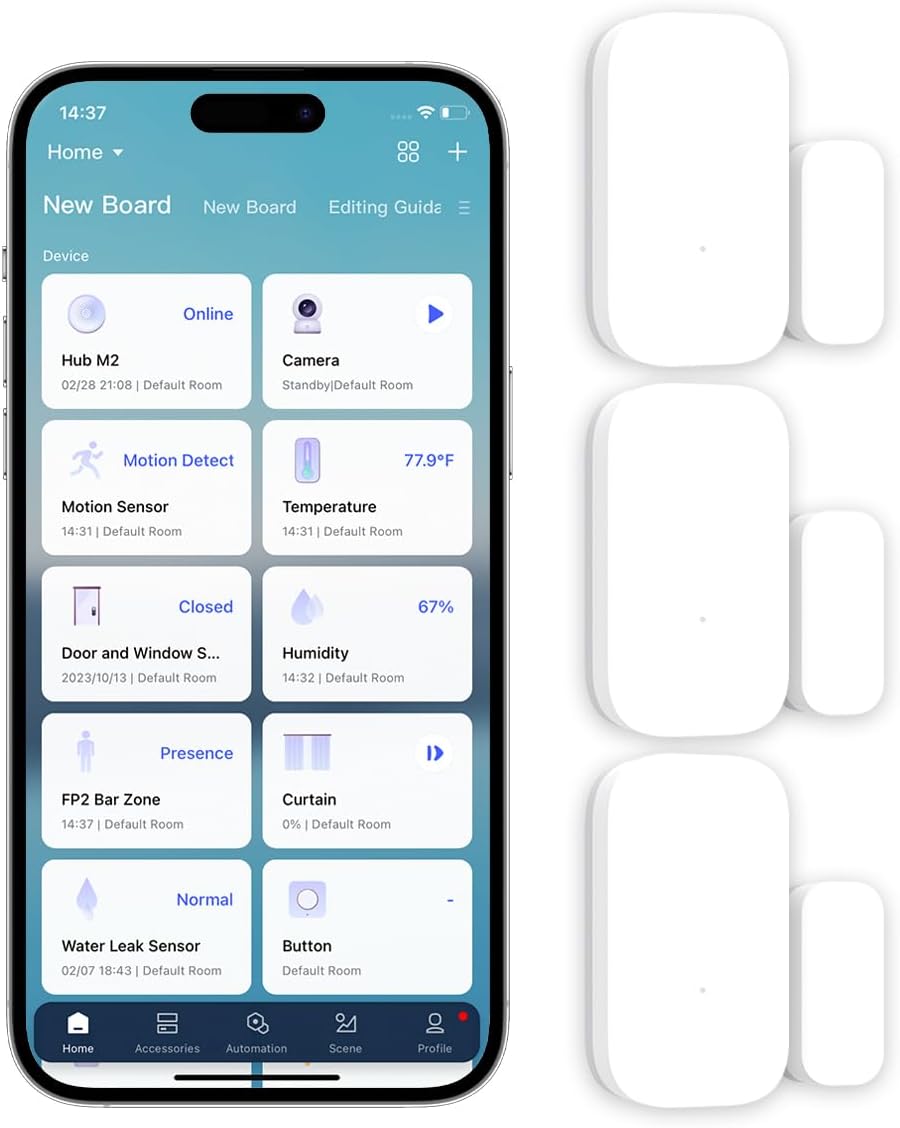
Aqara Door and Window Sensor T1 Review: Know When Things Open and Close
Aqara Door/Window Sensor T1 delivers reliable open/close detection with 2-year battery life at ¥69 — an essential buildi
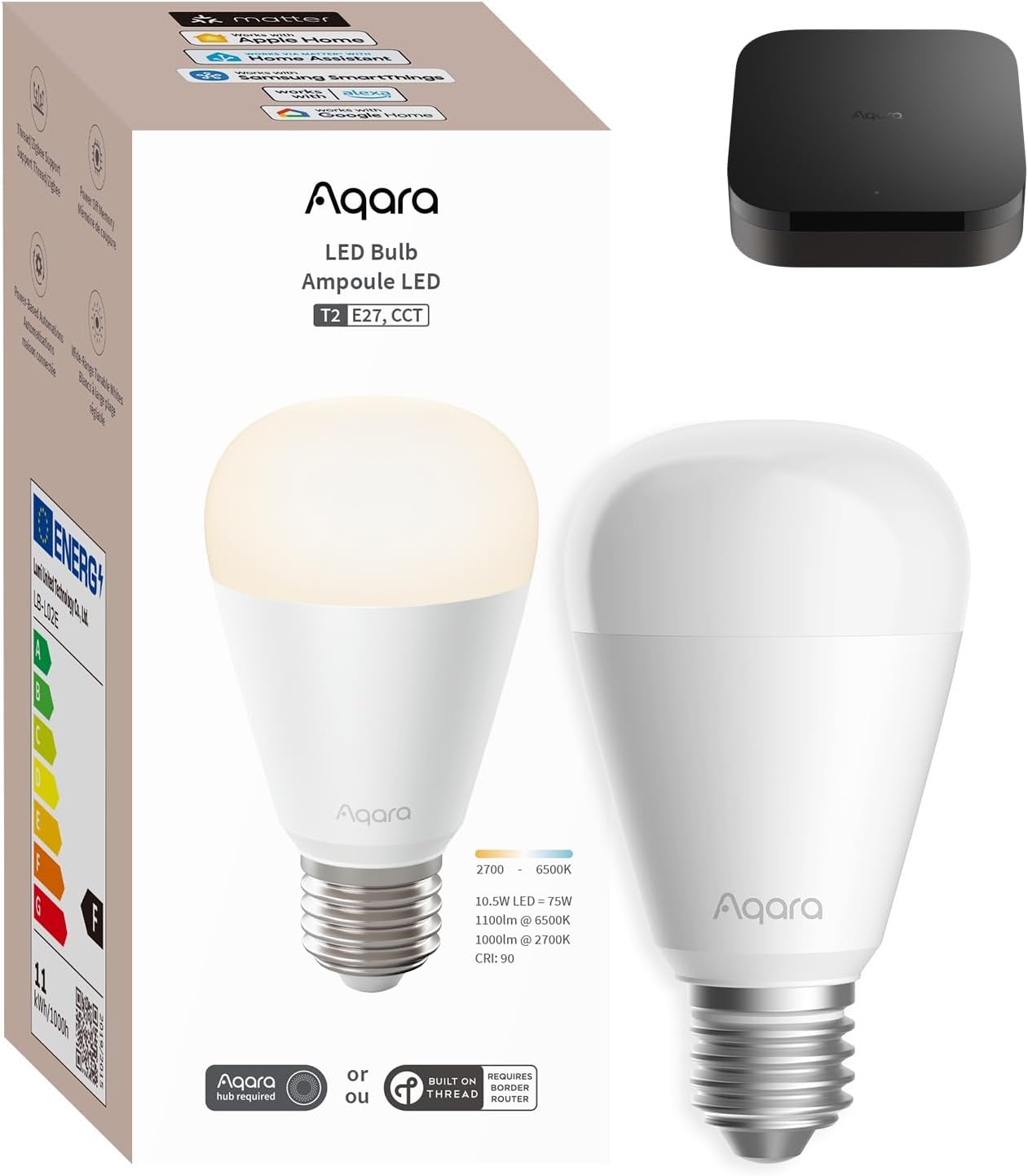
Aqara Hub M3 Matter Controller Review: Multi-Protocol Smart Home Hub With 2,000+ Reviews
Aqara Hub M3 Matter Controller has 2,000+ reviews on JD at 4.4/5, priced at ¥399 ($55). Users love multi-protocol suppor
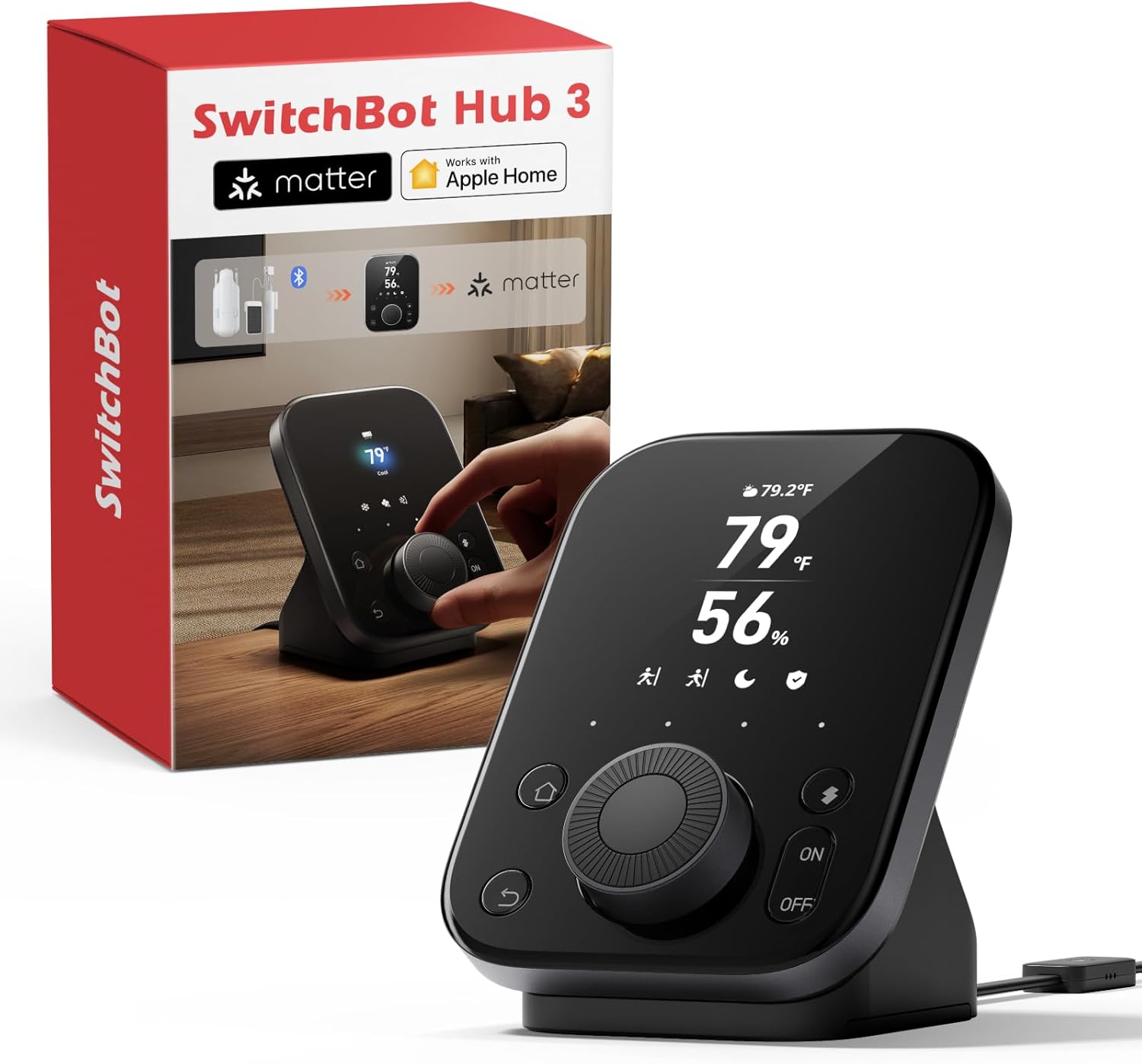
Aqara Hub M3 Review: The Smart Home Bridge That Does It All
The Aqara Hub M3 is a next-generation smart home hub supporting Matter, Thread, Zigbee 3.0, and Bluetooth, bridging Aqar

Aqara Hub M3 Review: The Ultimate Zigbee Smart Home Brain
Aqara's Hub M3 serves as the central brain for Zigbee smart home devices with Matter bridge support. We review this esse